
Quiet Luxury for Clear Sound
Truly clear, high-quality sound requires the most pure and uncompromising space to contain it.
In the construction of modern professional recording studios, the rigorous calculation of acoustic metrics and the expression of spatial aesthetics often must reach a delicate balance. This case study discards the cold and cluttered stereotypes of traditional studios.
Using "Quiet Luxury" as the visual baseline and integrating the concept of "Integrated Scene Design" throughout, it blends architectural acoustic components, professional lighting, and minimalist geometric lines to create a music production space that offers both a top-tier acoustic environment and a warm, textured feel.
Below, we will provide an in-depth analysis of the studio's design details from the acoustic treatment phase and the equipment integration phase.
Shaping and Silencing: Acoustic Treatment and Spatial Aesthetics
Before the equipment is moved in, the studio's hardscape and acoustic components function as a massive acoustic instrument themselves. At this stage, we can see how precise acoustic calculations are transformed into a minimalist visual language.
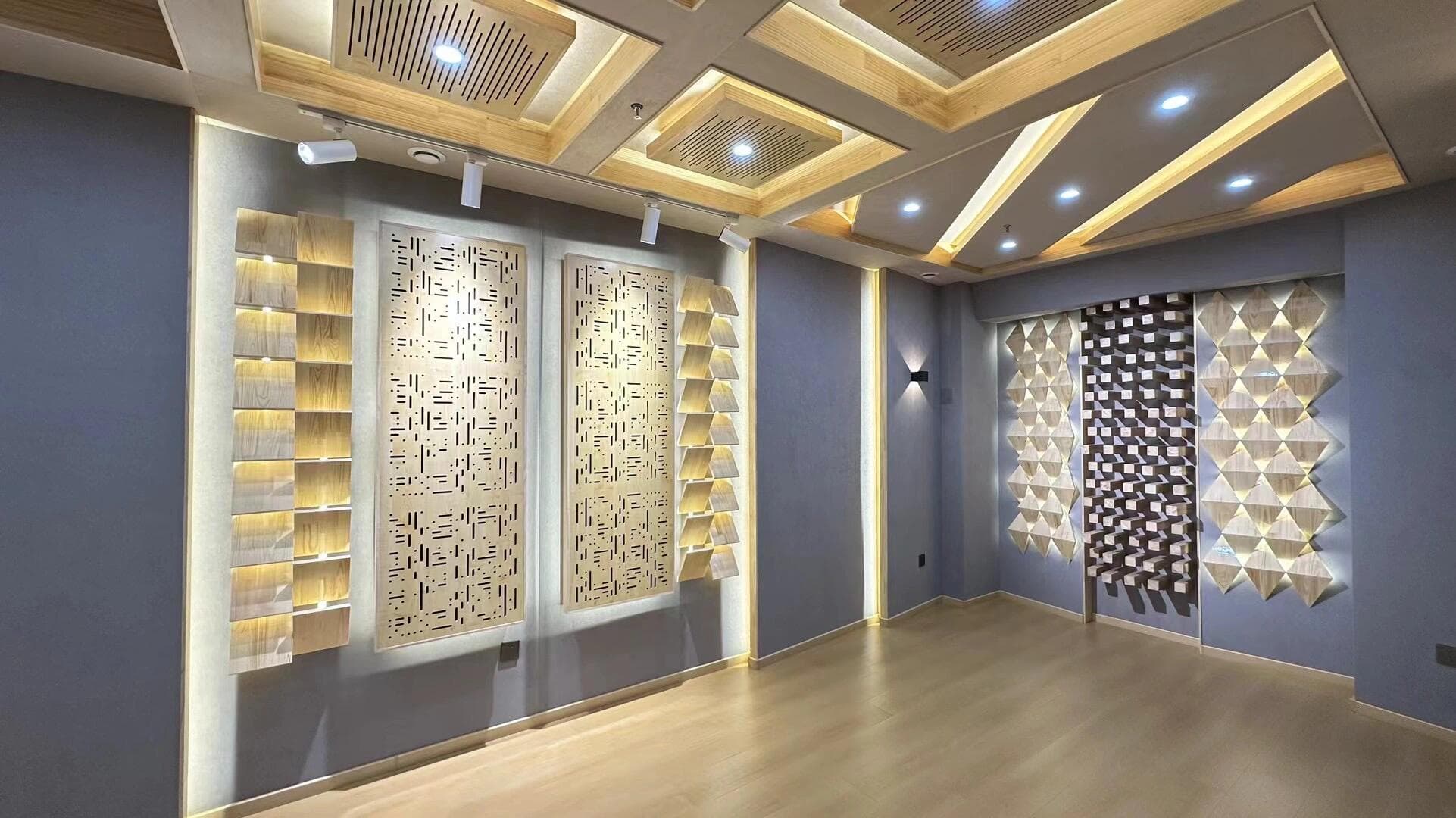
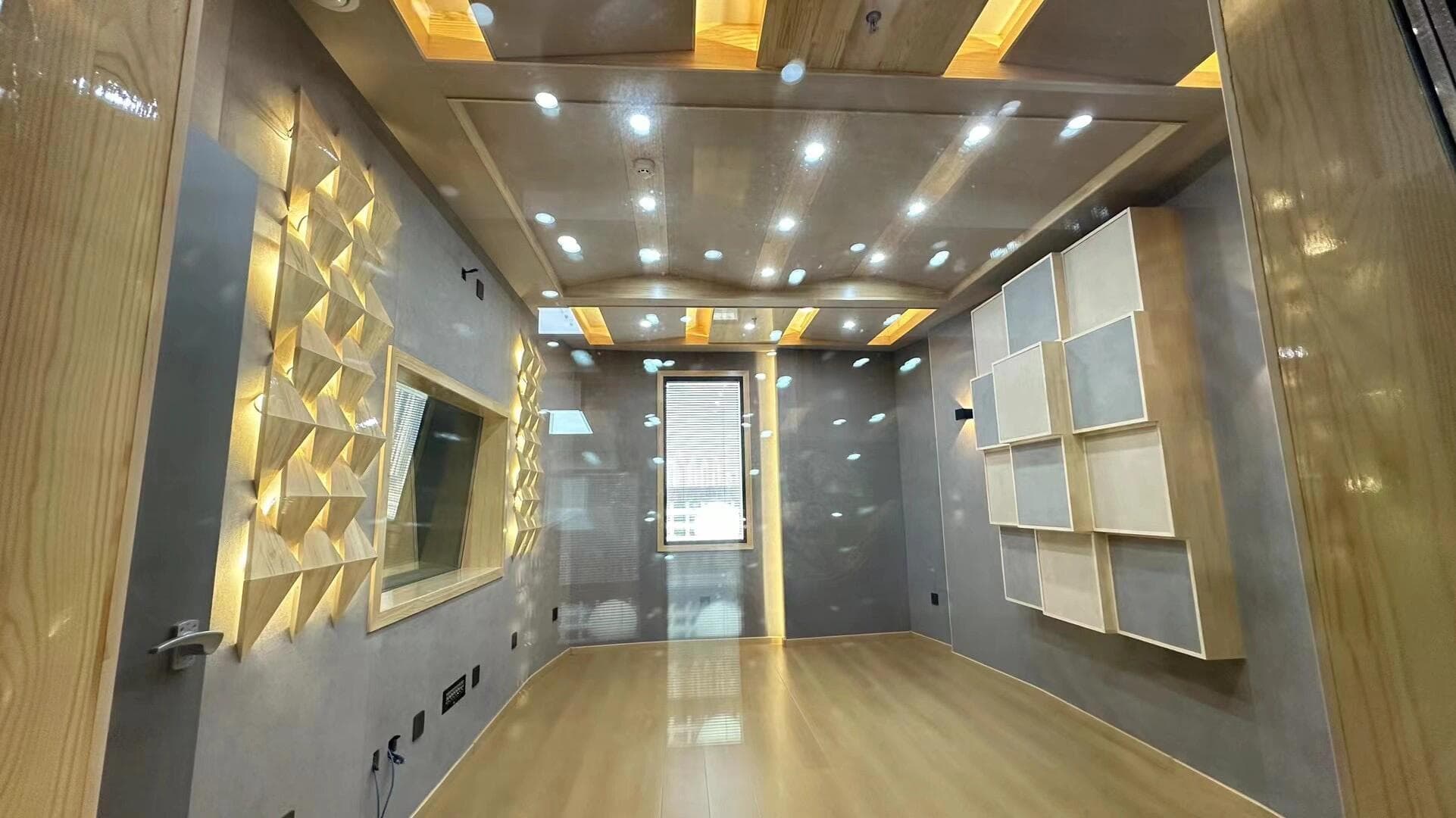
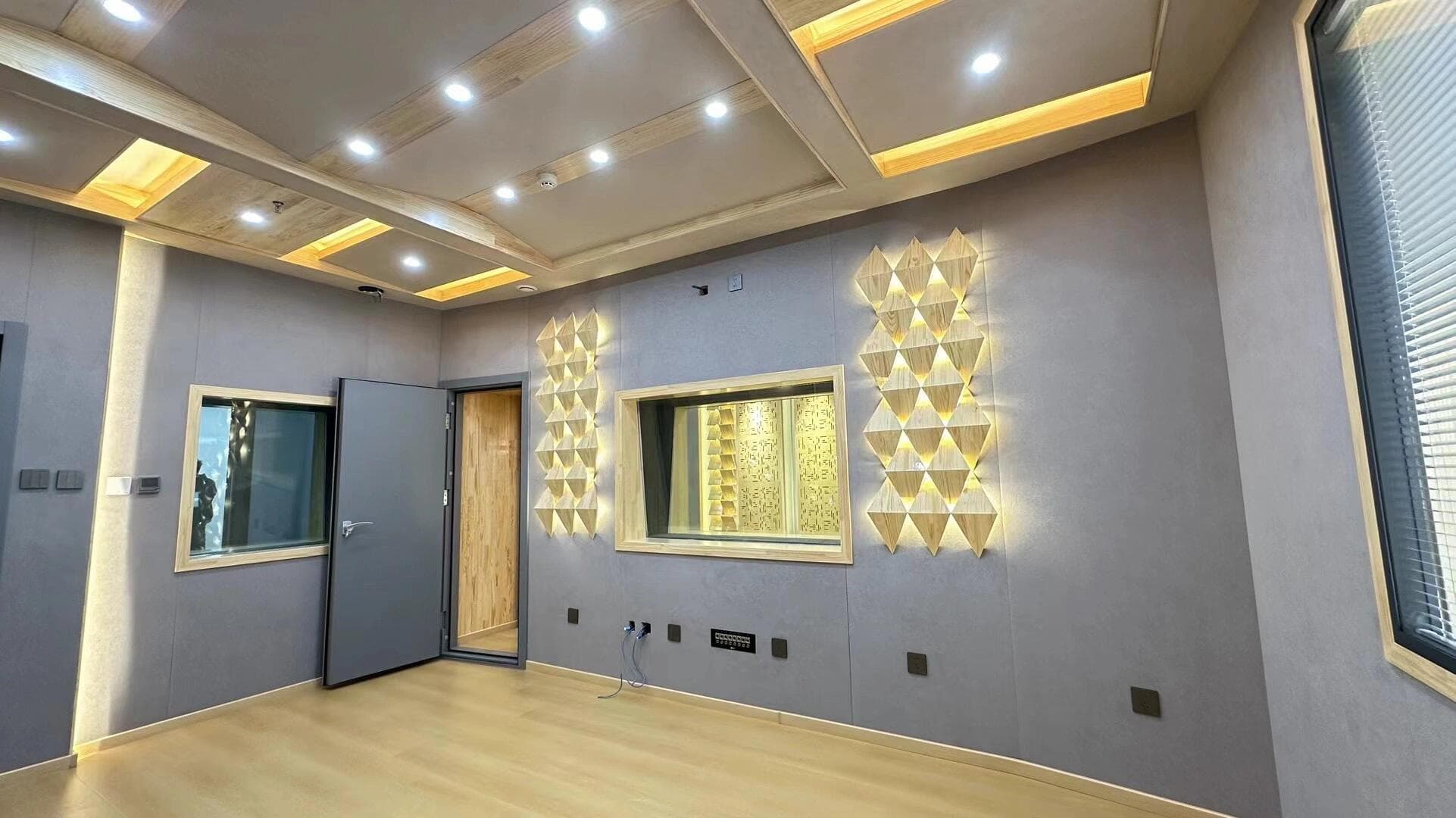
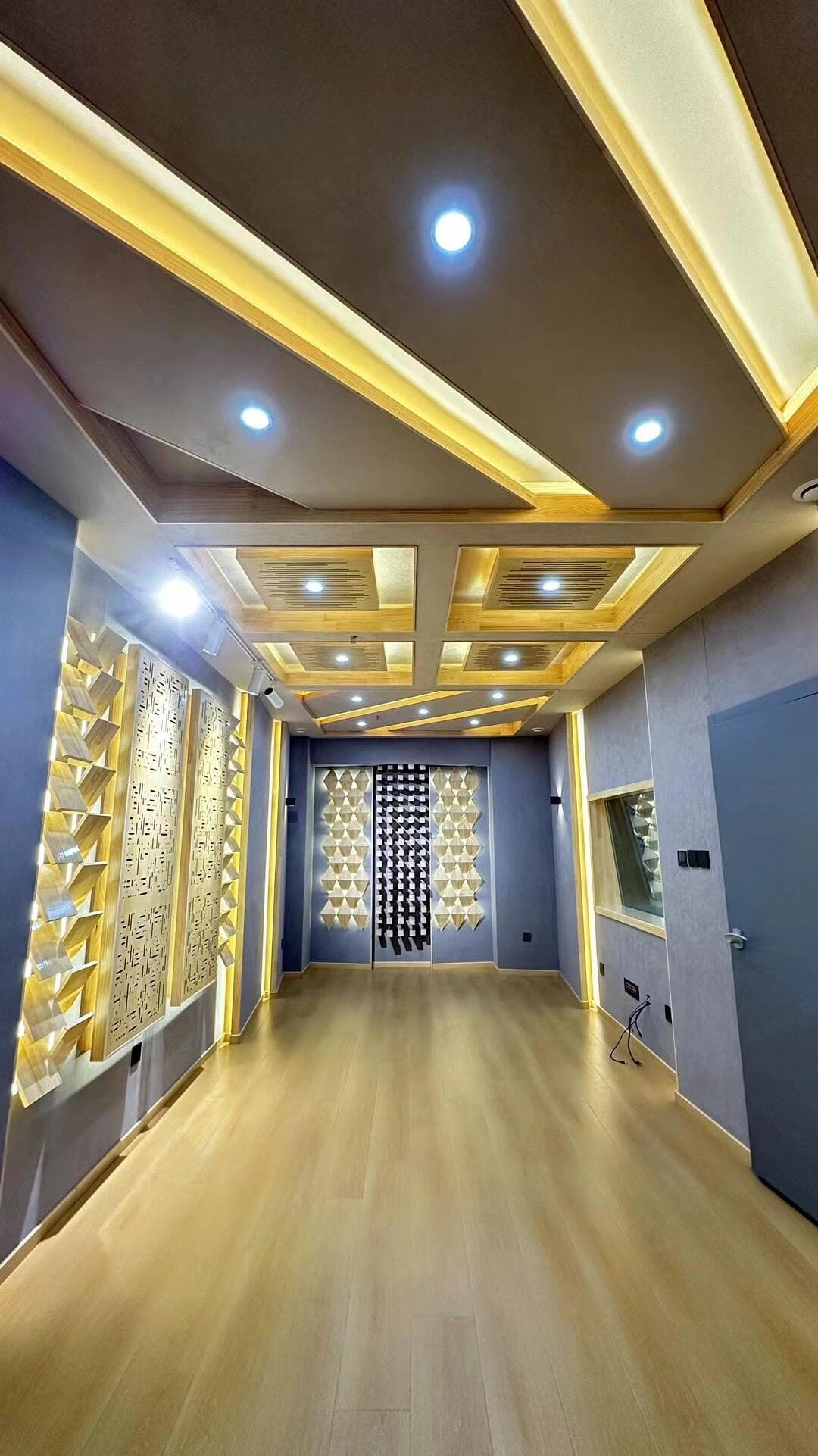
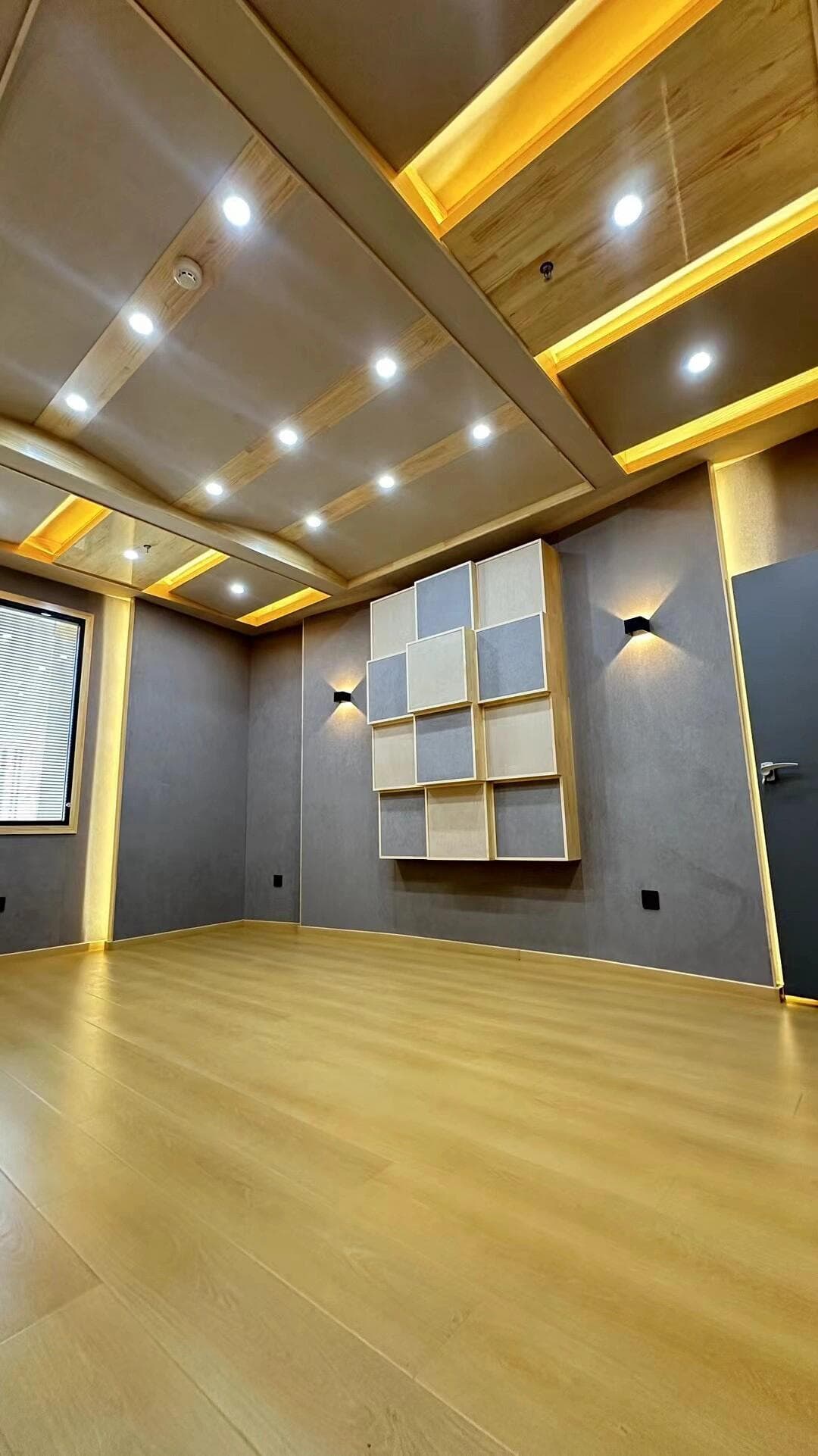
Room-in-Room Structure and Minimalist Baseline: The entire studio utilizes a high-standard floating "room-in-room" sound isolation structure. Combined with heavy customized acoustic doors and sharply angled acoustic observation windows, it completely isolates structural transmission and external environmental noise.
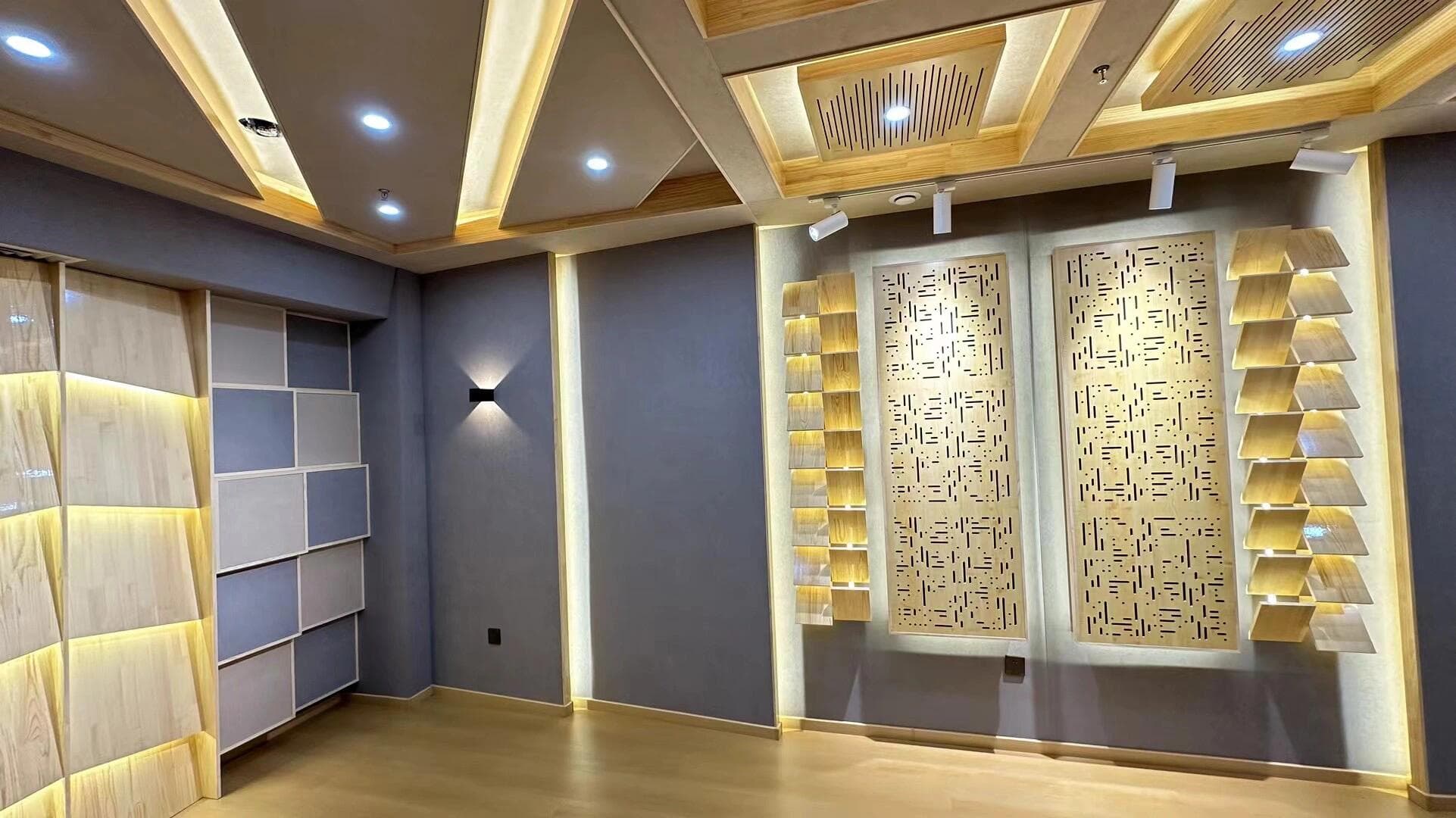
The walls largely feature high-grade gray acoustic fabric panels, paired with light-colored natural wood flooring, establishing a restrained and serene visual foundation for the space.
Geometric Lighting and Array Diffusion
The customized wooden acoustic components on the walls are the visual focal points of the space. They are not only art installations but also precise sound field regulators:
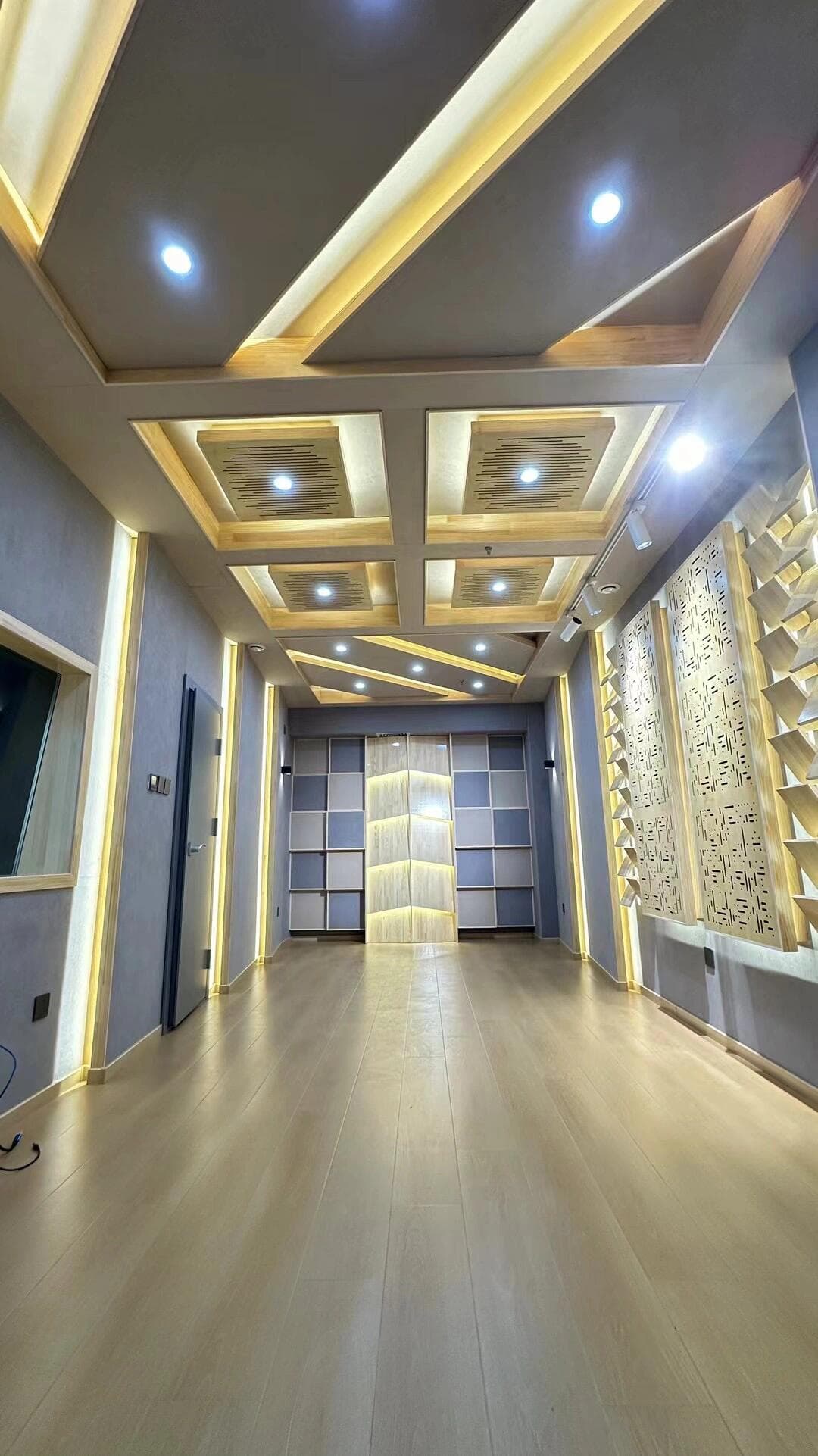
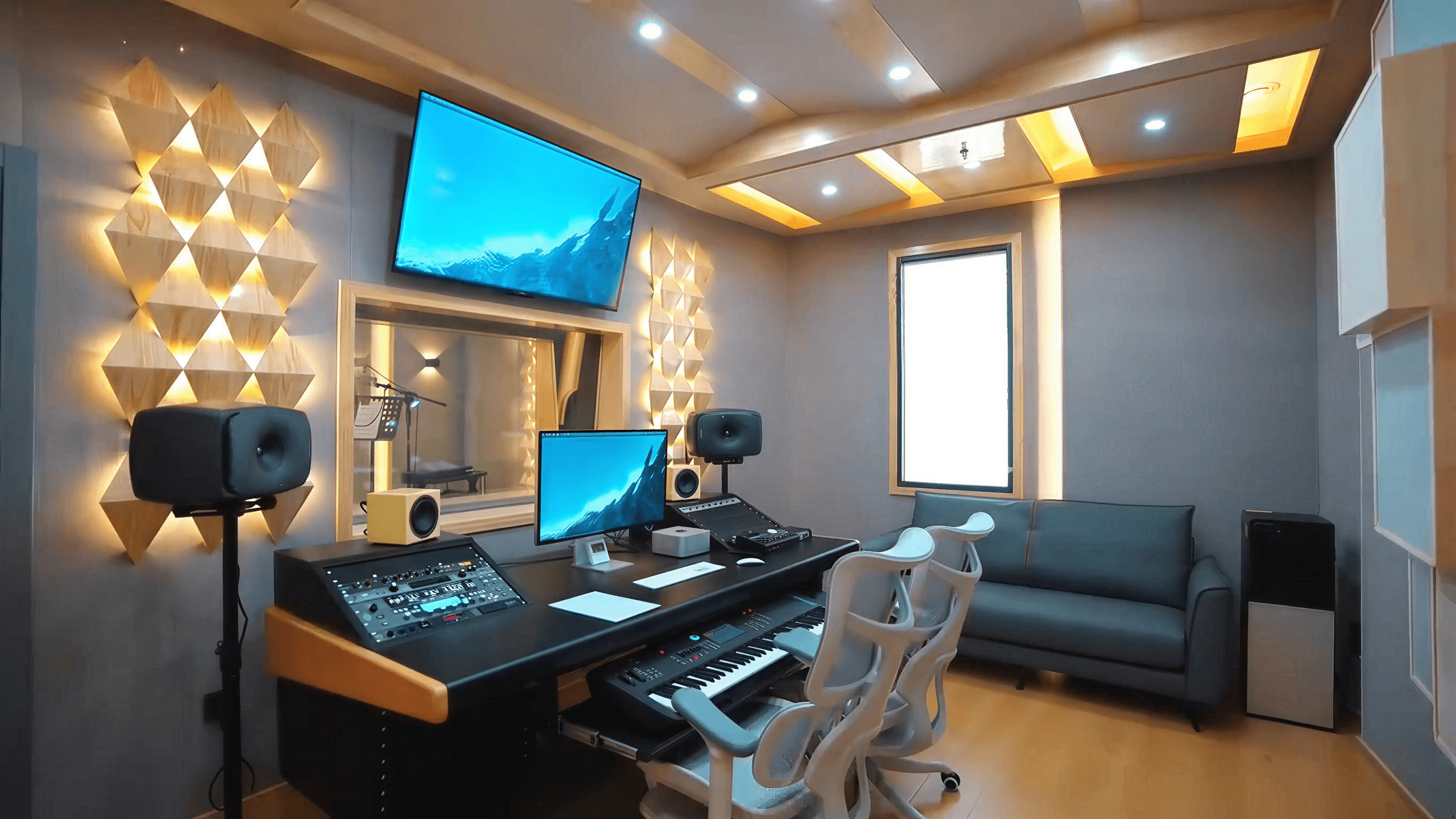
Triangular Geometric Backlit Diffusers: The side walls feature an array of triangular-pyramid wooden diffusers. This 3D geometric structure effectively scatters mid-to-high frequency direct sound, eliminating flutter echoes. Warm LED light strips are cleverly hidden behind the components, washing along the geometric edges to create deeply layered lighting on the gray walls, perfectly blending functionality with ambiance.
Slotted Acoustic Panels and Matrix Shapes: Slotted wooden acoustic panels with varying perforation rates and 3D matrix blocks are interspersed along the side walls. Through their staggered physical depth and the sound-absorbing cavities behind them, they precisely control mid-to-low frequency standing waves and reverberation time (RT60).
Floating Acoustic Ceiling
The ceiling treatment is equally ingenious. A floating geometric wooden framework divides the ceiling into rich layers, embedding perforated sound-absorbing panels and concealed lighting within.
This design not only neatly hides the cabling and HVAC systems but also breaks up the acoustic defects commonly associated with flat ceilings, turning the entire overhead area into a large low-frequency trap and ceiling reflection control zone.
Equipment Installation and Workflow Alignment
While the acoustic hardscape creates the perfect "container" for sound, the arrival of professional recording and monitoring equipment injects the true soul into this space.
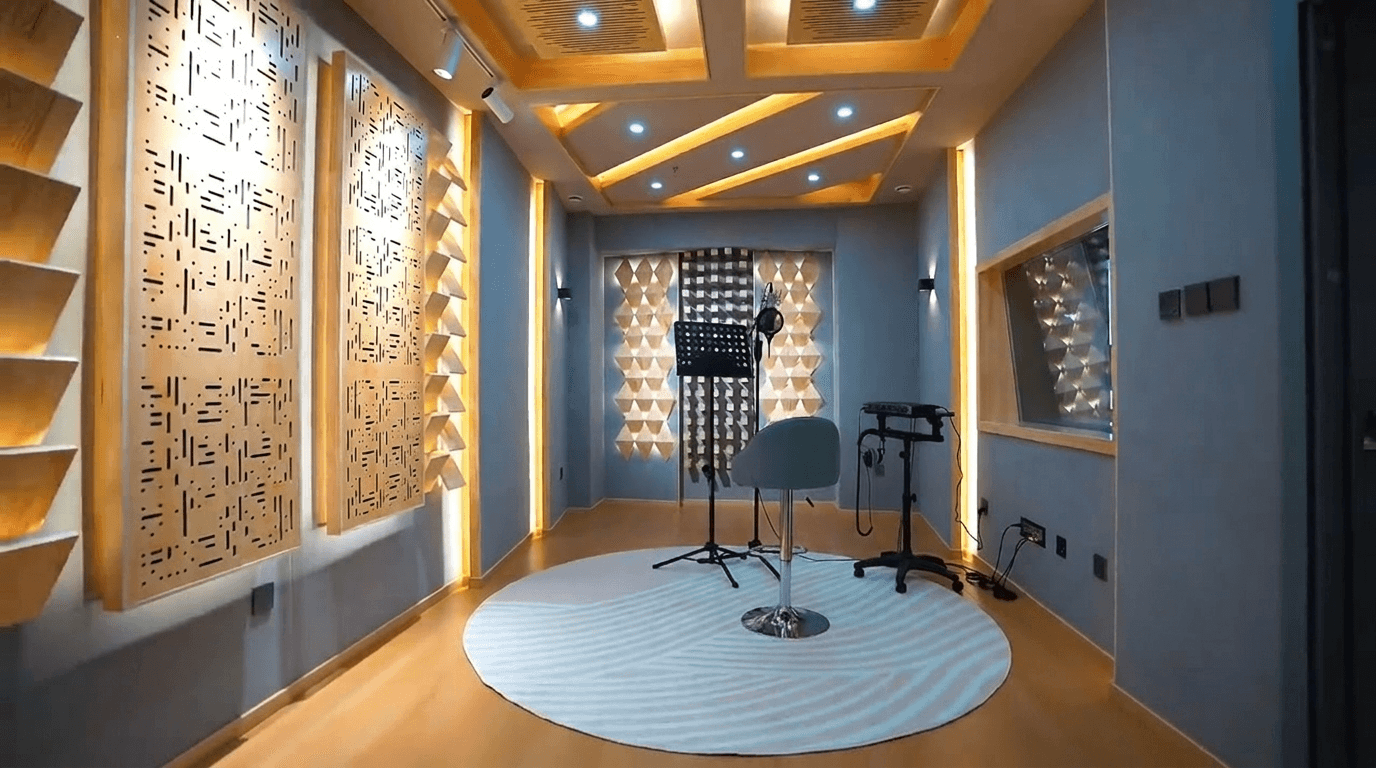
The Pure Live Room: In the fully furnished live room, a circular geometric rug and a minimalist high stool define the core workspace for singers or musicians. A high-quality condenser microphone and pop filter are already in place.
The triangular backlit diffusers and black-and-white acoustic modules behind ensure that the sound captured by the microphone is clean and uncolored, yet retains a moderate sense of natural "Air," avoiding the oppressive and dry feeling caused by over-absorption.
The Control Room Core
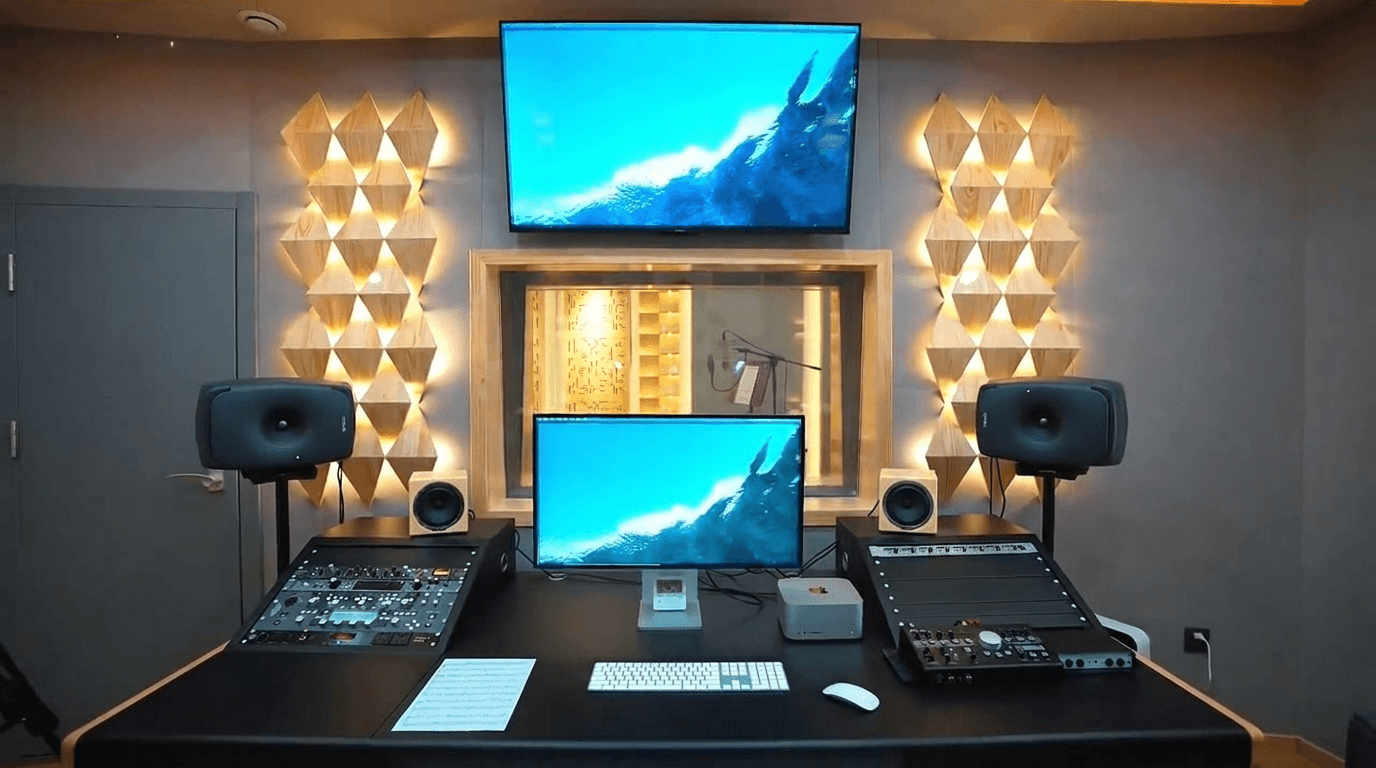
The control room is the brain of the studio. The spacious, custom-built recording and arranging desk presents a steady, matte black texture. Outboard gear racks are symmetrically embedded on the left and right sides of the desk, integrating various audio interfaces and outboard effects.
The ergonomic, within-reach design makes the audio engineer's creative workflow much smoother. The display system layout also follows the principle of minimalist symmetry, with a wall-mounted main screen and a desktop secondary screen meeting the complex visual demands of transport control and complex mixing sessions.
Ultra-Precise Coaxial Monitoring
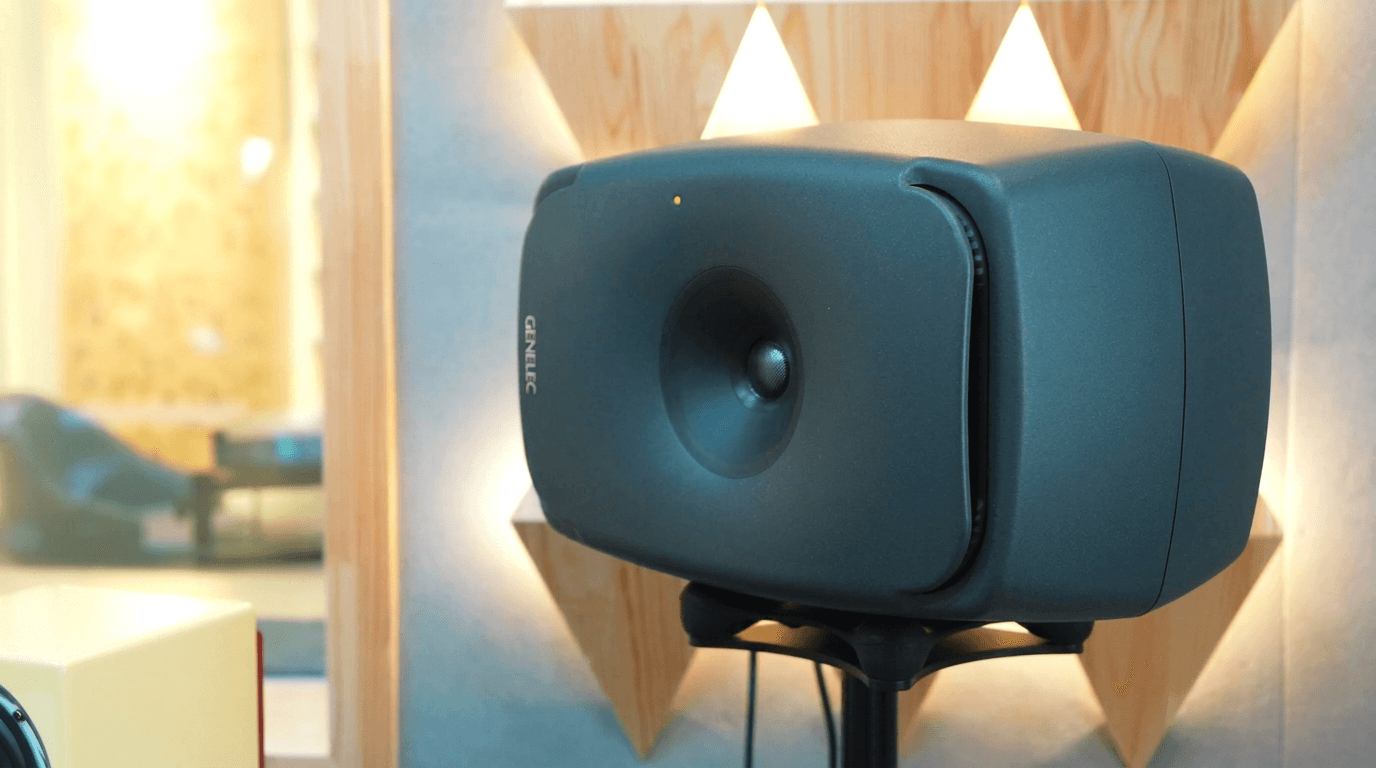
At the acoustic "Sweet Spot" of the control room, a pair of top-tier Genelec coaxial active studio monitors (The Ones series) is equipped.
The point-source characteristics brought by the coaxial design, combined with the studio's rigorous symmetrical acoustic treatment, provide the mixing engineer with scalpel-like precise stereo imaging and an extremely flat frequency response. This is the best response to the space's excellent acoustic metrics.
Conclusion
From an empty shell to a space of quiet luxury, and finally to a professional recording studio with lights on and equipment running, this project vividly illustrates the power of "Integrated Scene Design."
It is no longer a rigid stacking of acoustic materials, but rather a precise orchestration of geometry, light, texture, and electro-acoustic equipment, building a space that delights both the ears and the eyes.