
Multi-Functional Auditorium
Project Type: Multi-functional Auditorium
Main Acoustic Materials: Wood-grain aluminum panels, perforated aluminum panels
PA System Architecture: Concealed sound bridge cluster, front fills, image localization, and subwoofer system
This auditorium project aims to create a modern space characterized by uniform sound coverage, high speech intelligibility, and a highly integrated visual design. The design not only considers the scientific application of architectural acoustic materials but also focuses on addressing common issues in large spaces, such as acoustic image deviation and front-row blind spots, by deploying a multi-layered public address (PA) system. Below is a detailed engineering analysis of the project.
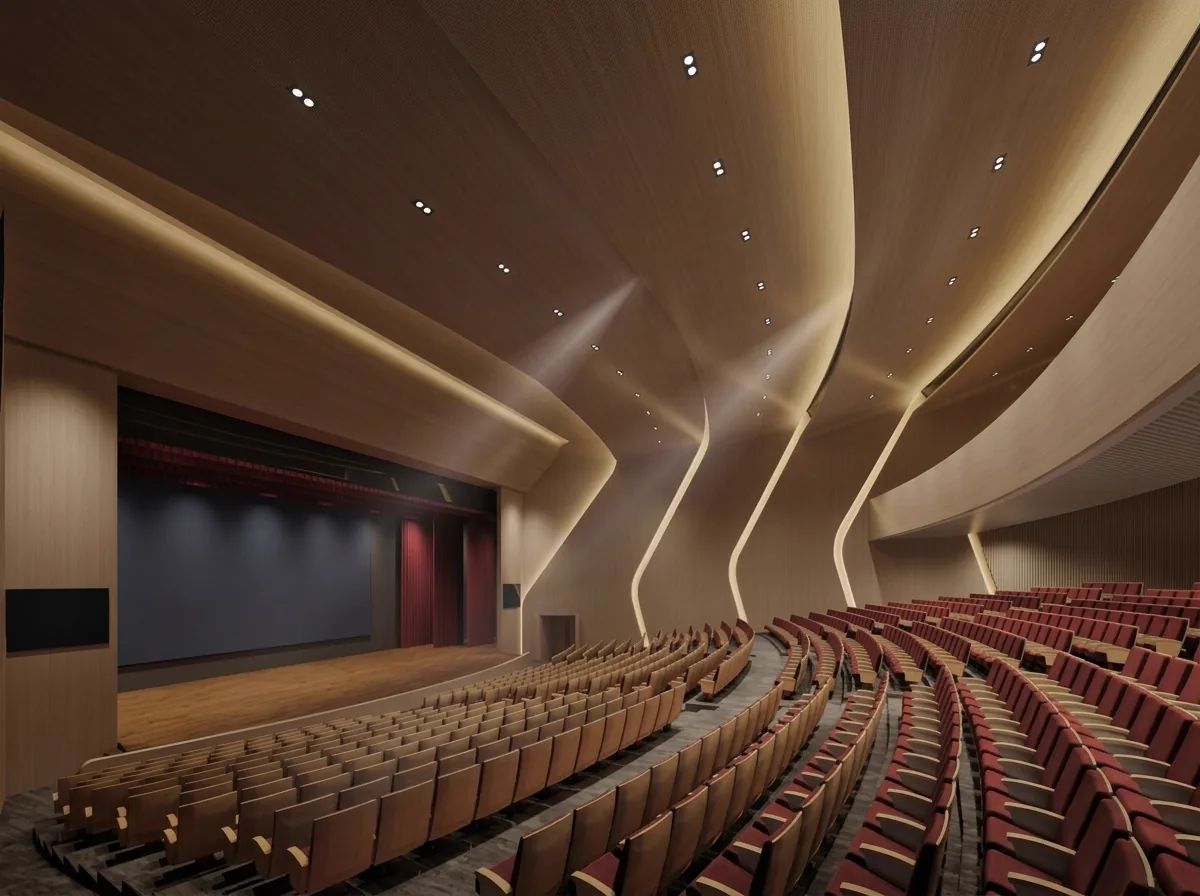
Structural Reinforcement and Base Treatment
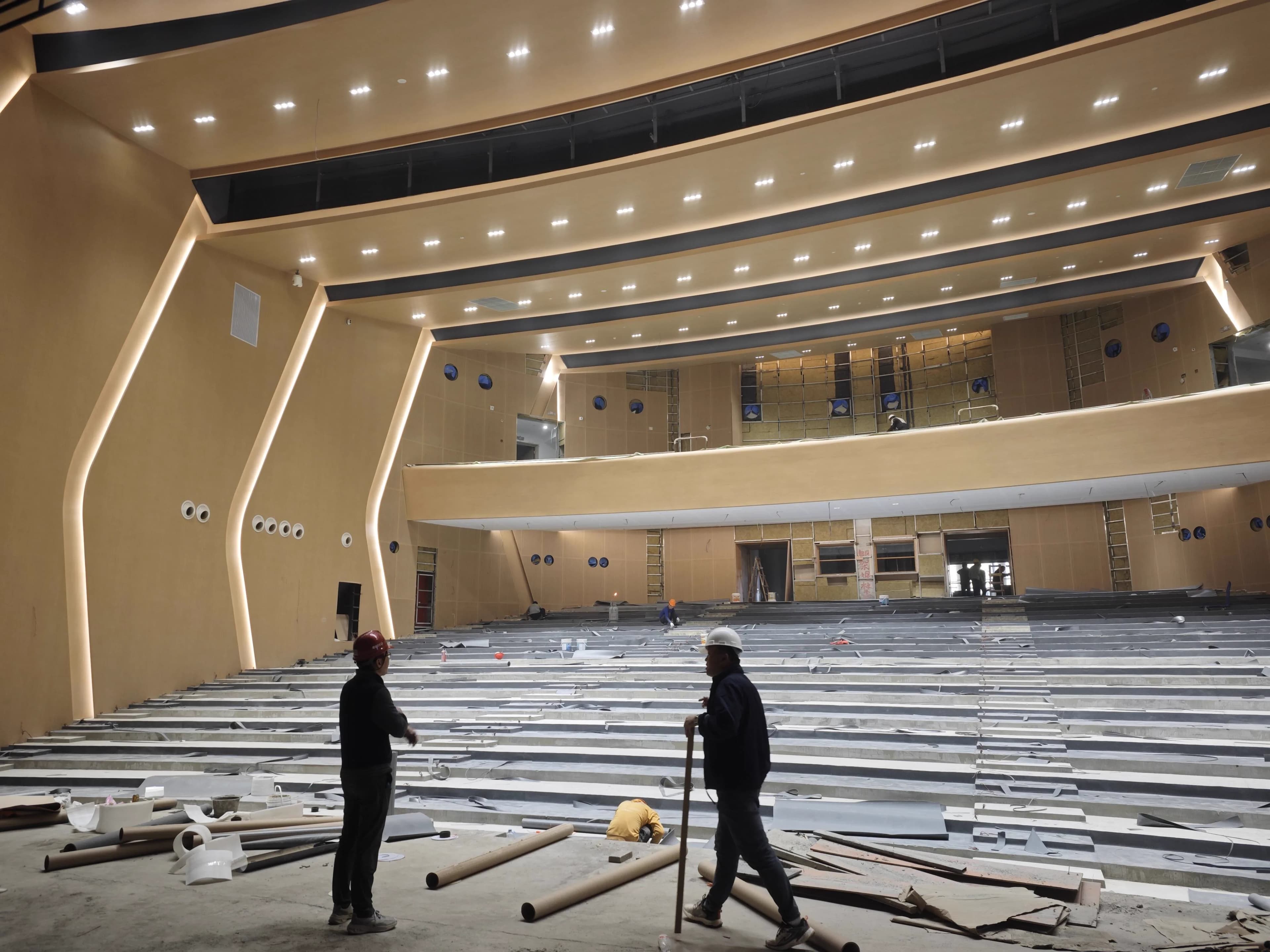
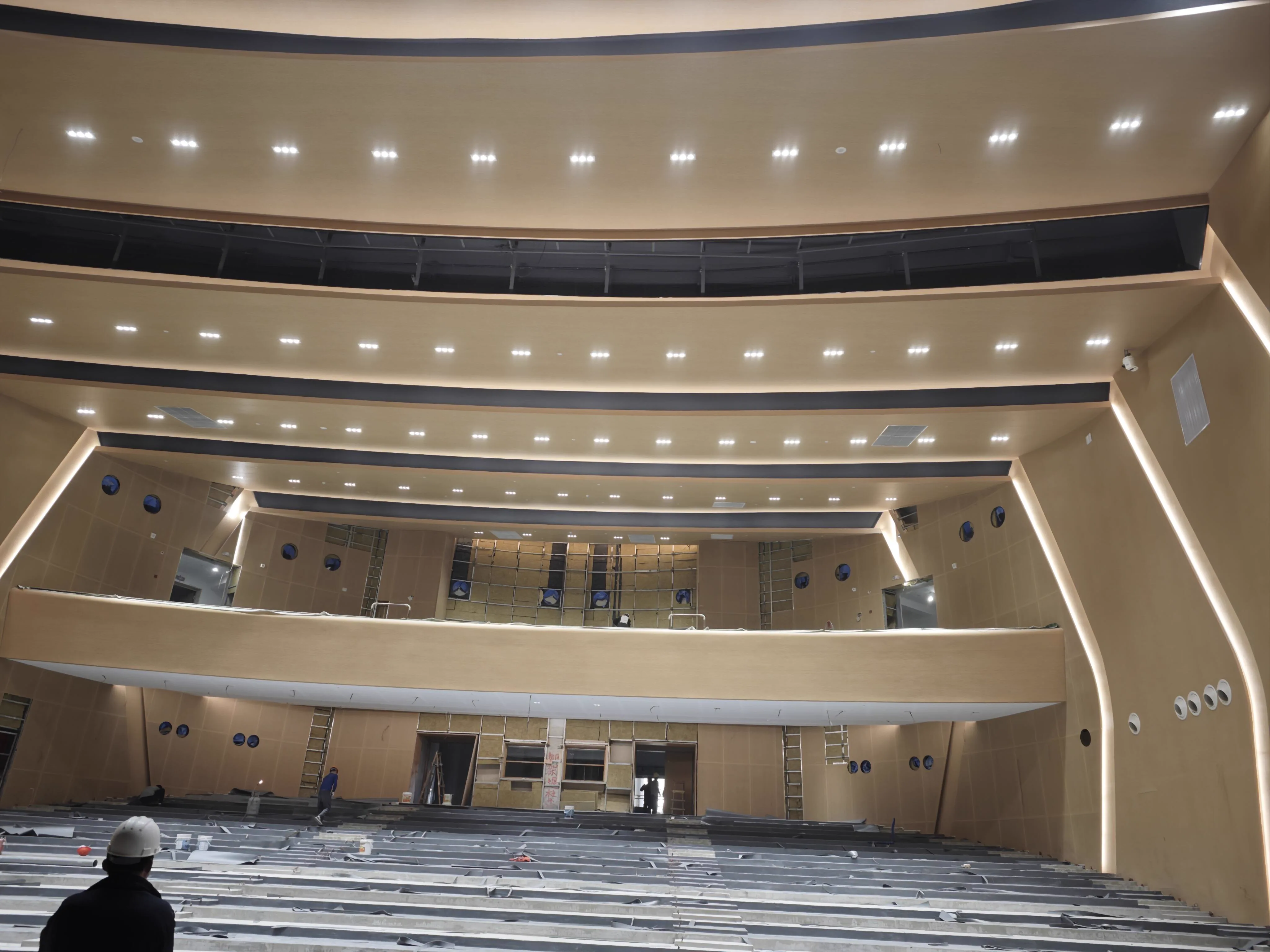
Prior to the installation of decorative finishes, extensive work was carried out on the large-span steel structure and acoustic base. The tiered layout of the seating area dictates the longitudinal distribution of the sound field, so the elevation of each step was strictly controlled during construction.
To support heavy PA equipment and lighting trusses, high-strength rigging points were pre-embedded above the stage and at the proscenium. Additionally, the side wall cavities were filled with uniformly thick sound-absorbing cotton to eliminate resonance noise.
Aluminum Panels and Perforated Tuning System
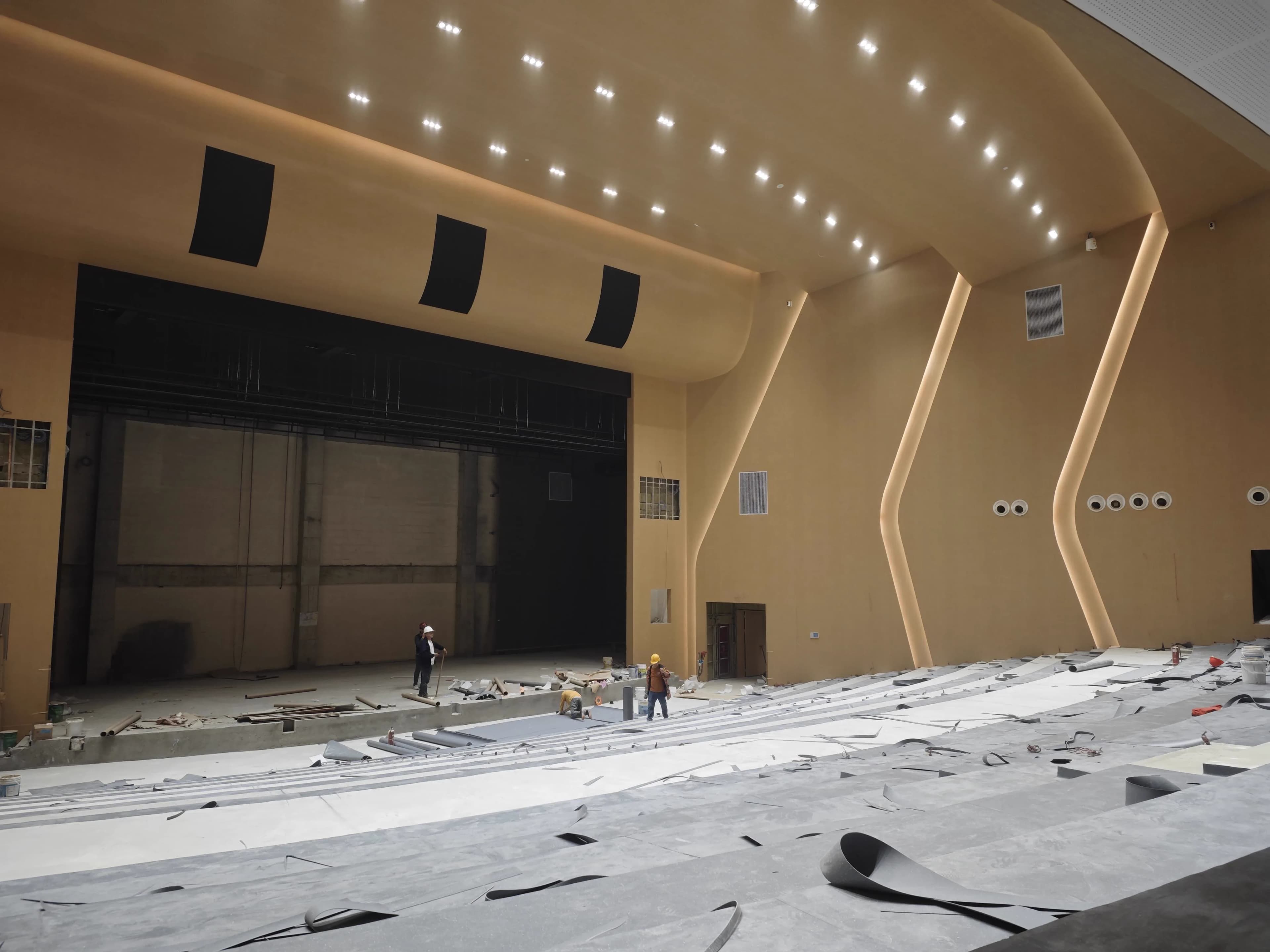
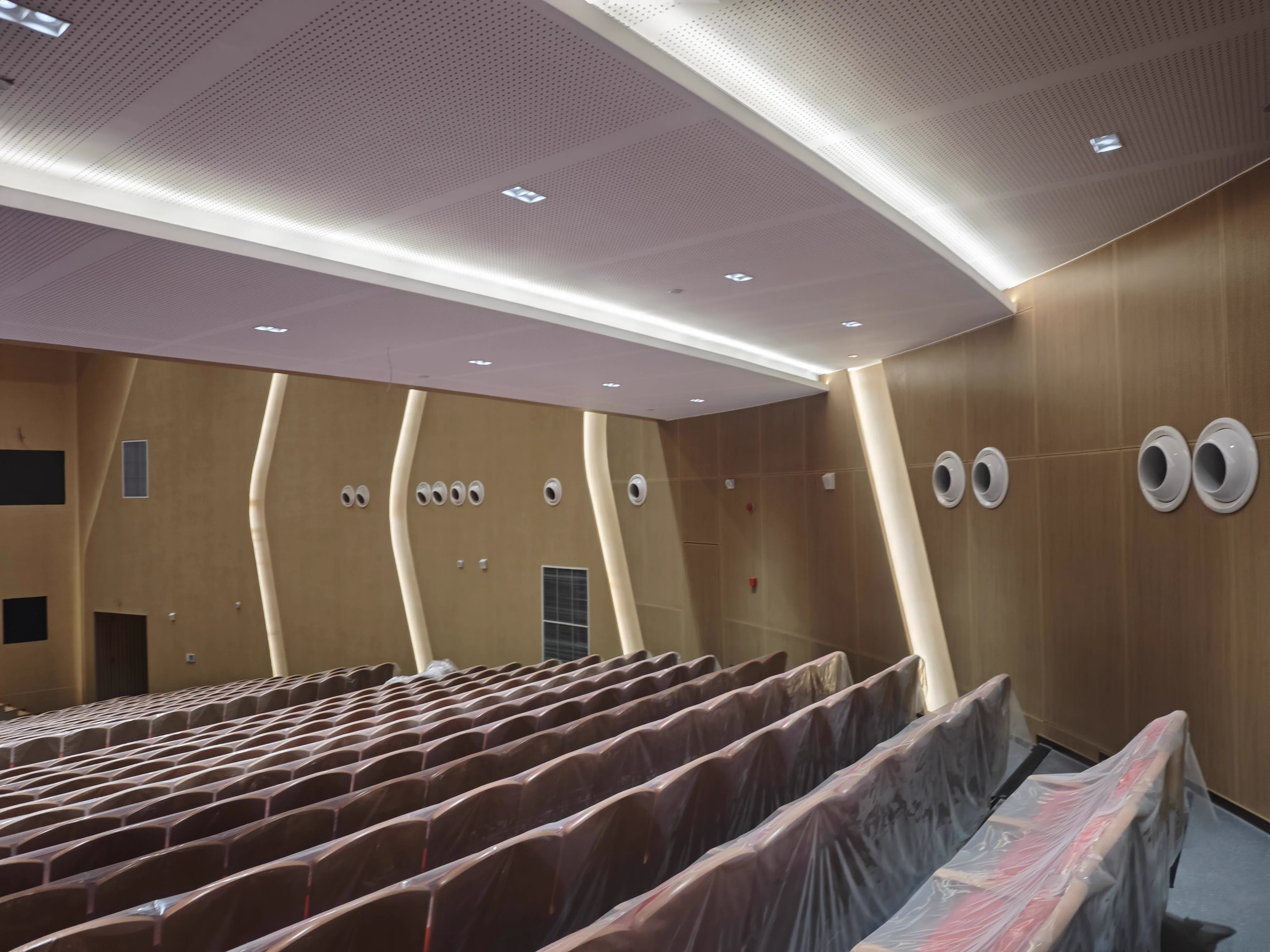
To balance aesthetics with fire safety requirements (Class A fire rating), the interior finishes primarily utilize wood-grain aluminum panels and perforated aluminum panels.
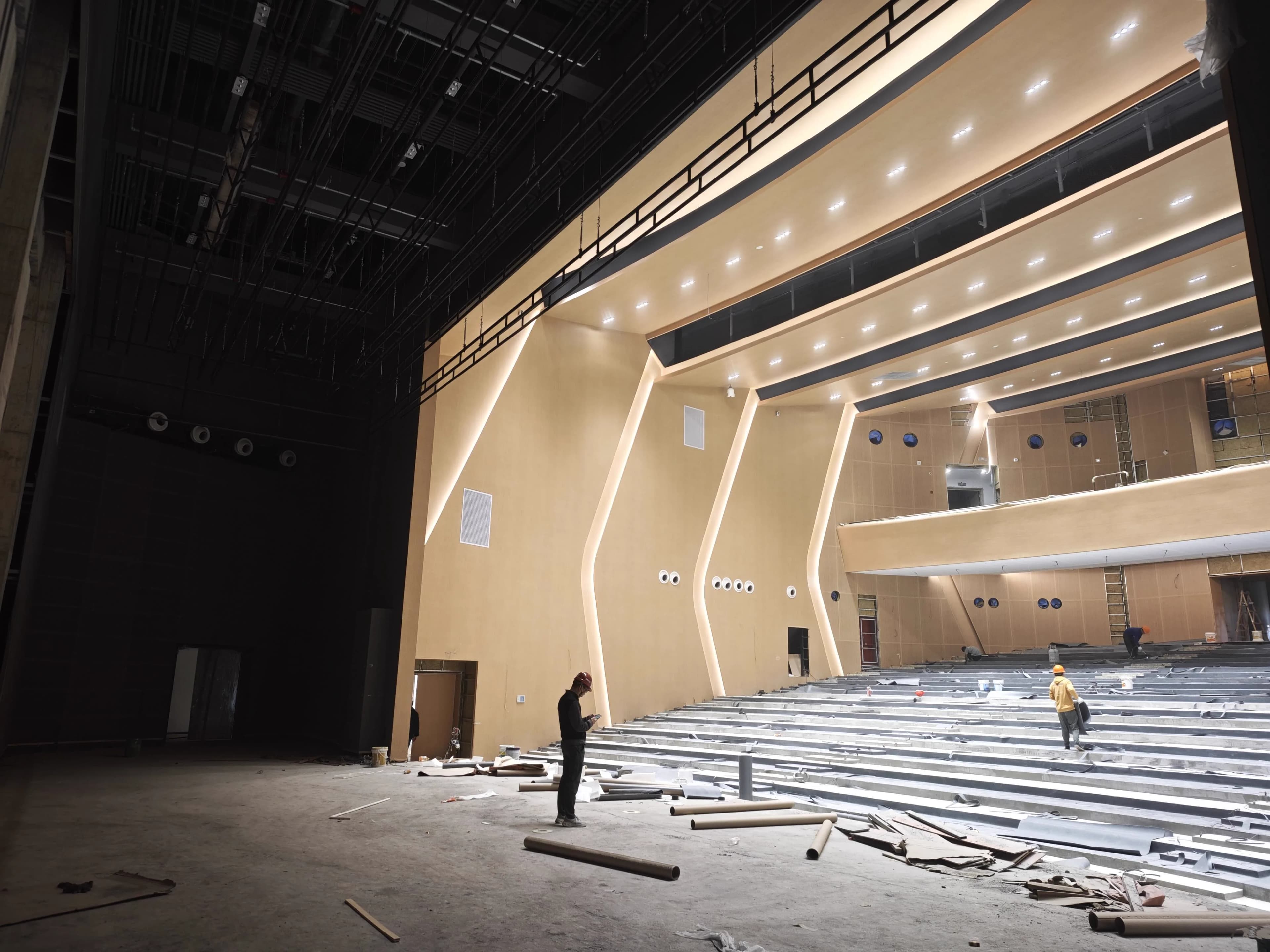
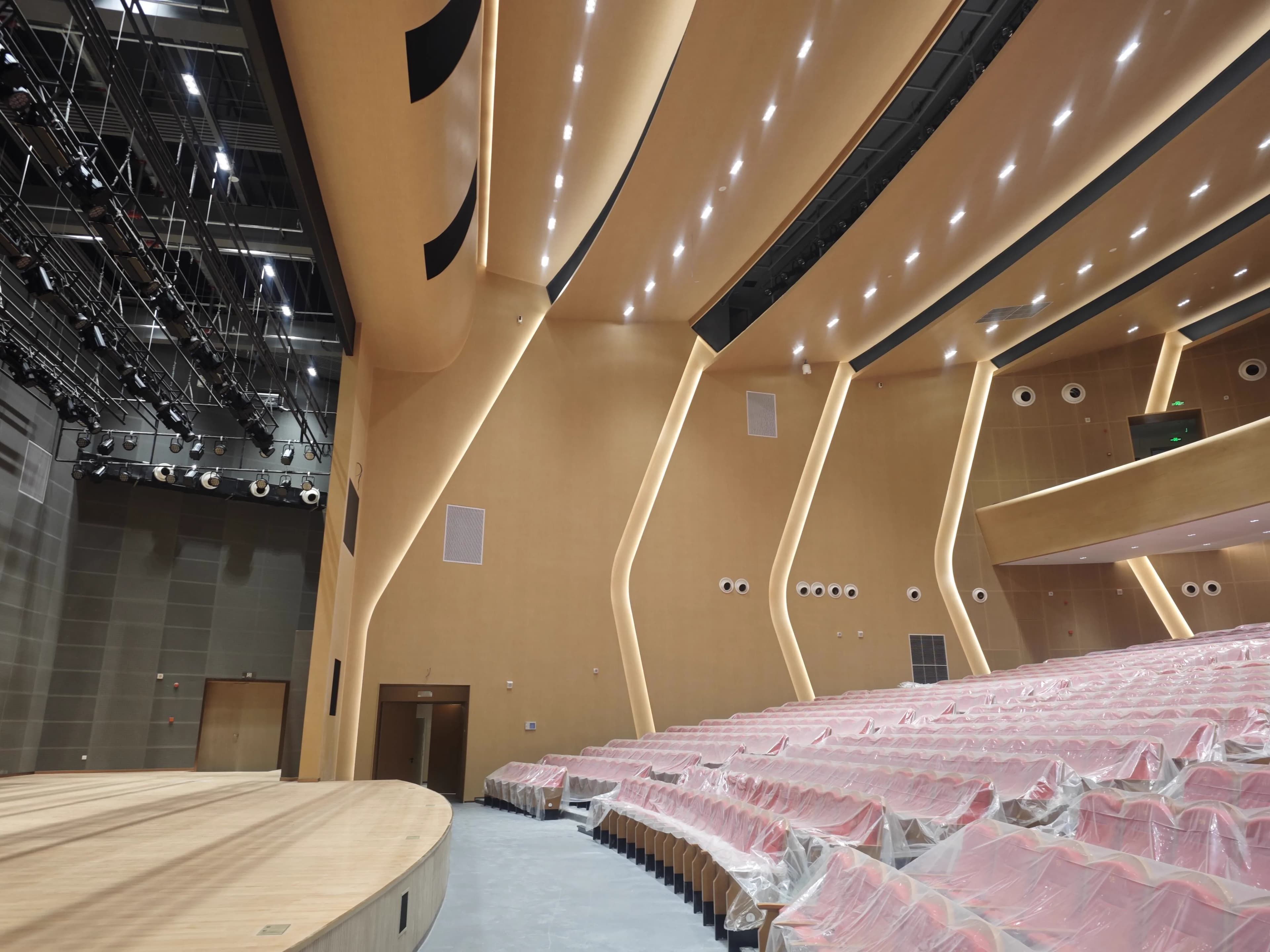
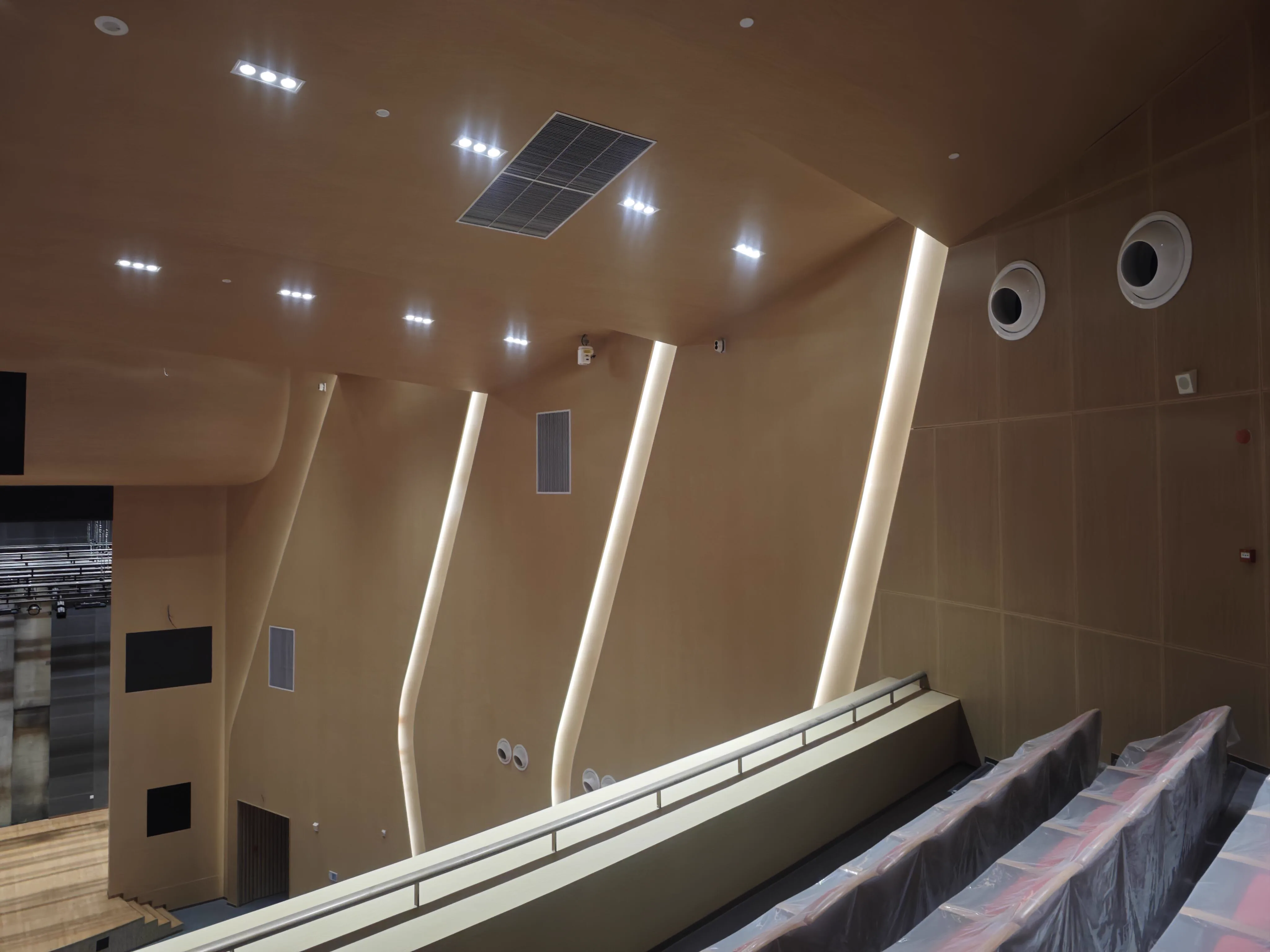
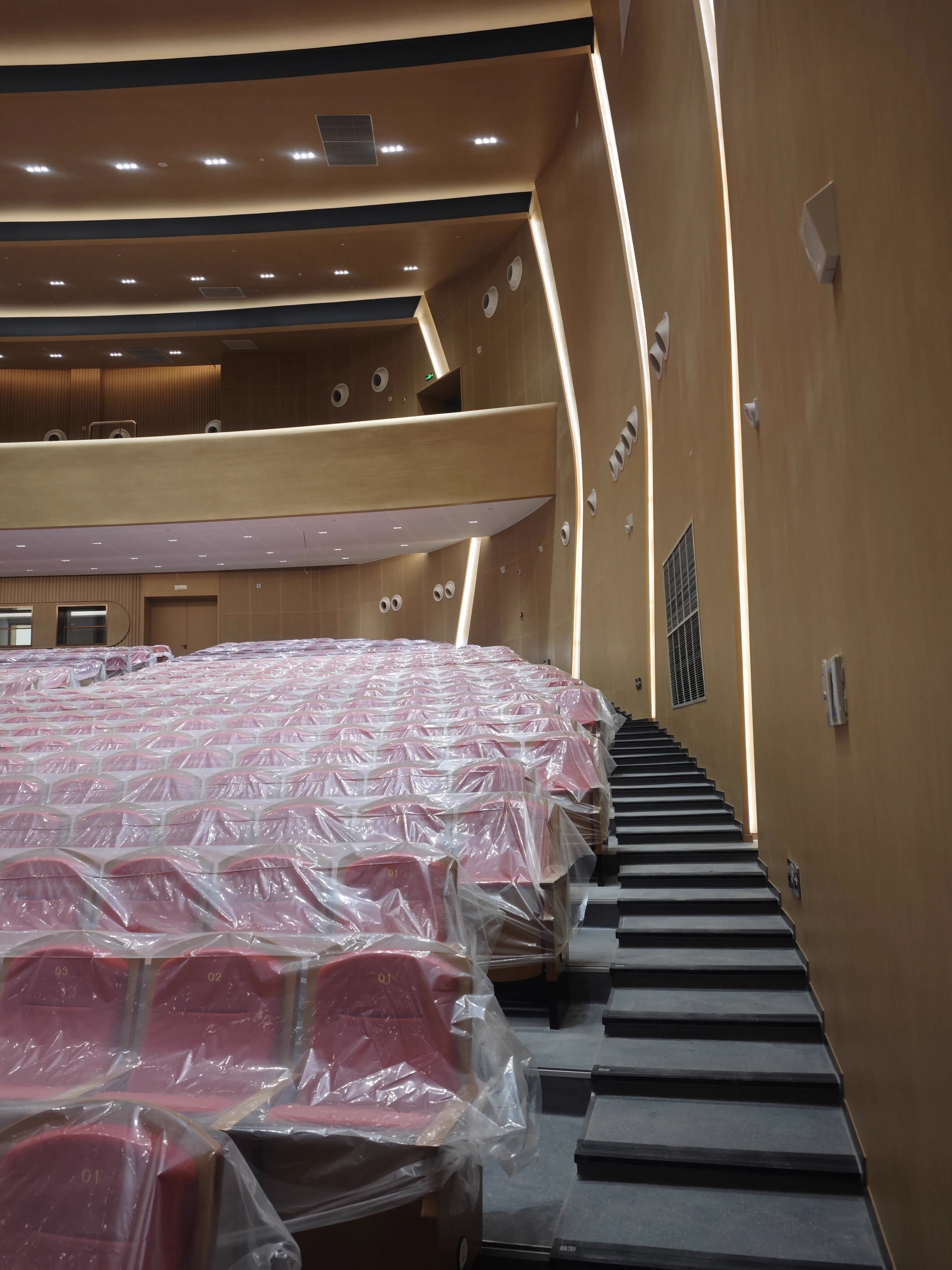
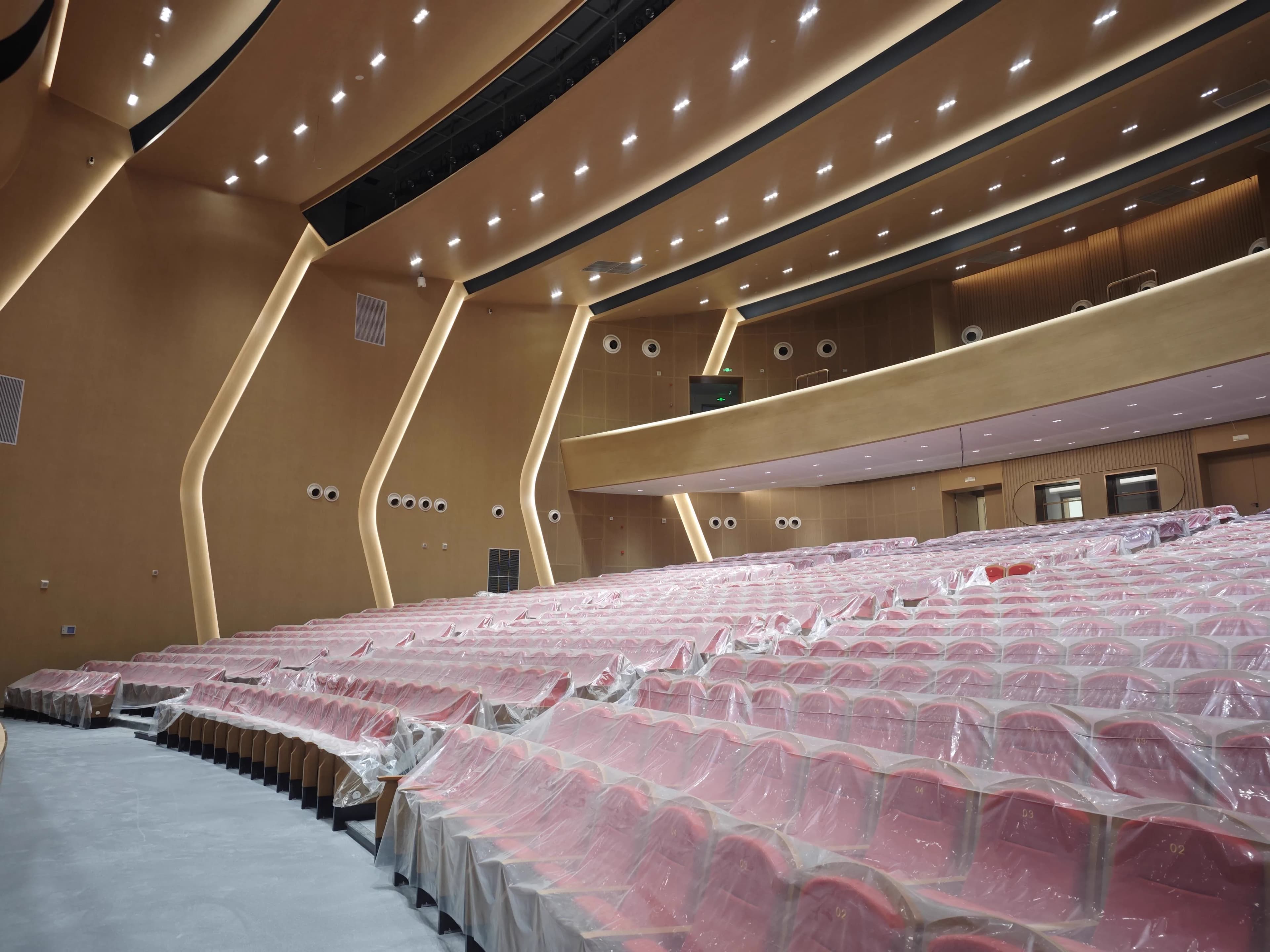
The side walls feature a folded-line geometric structure. This is not only to accommodate concealed LED strip lighting but, more importantly, to alter the reflection paths of sound waves, acting as a sound diffuser.
In areas prone to echoing, such as the rear wall of the audience seating and the underside of the balcony, perforated aluminum panels were extensively used. Combined with the sound-absorbing cavities behind them, these micro-perforated structures effectively control the reverberation time (RT60) by absorbing excess mid-to-low frequency energy.
Multi-Dimensional Full-Field Coverage Design
The PA system is crucial for realizing the auditorium's functionality. To maintain visual minimalism while achieving professional theater-level acoustics, this project utilizes a tiered, multi-group speaker configuration:
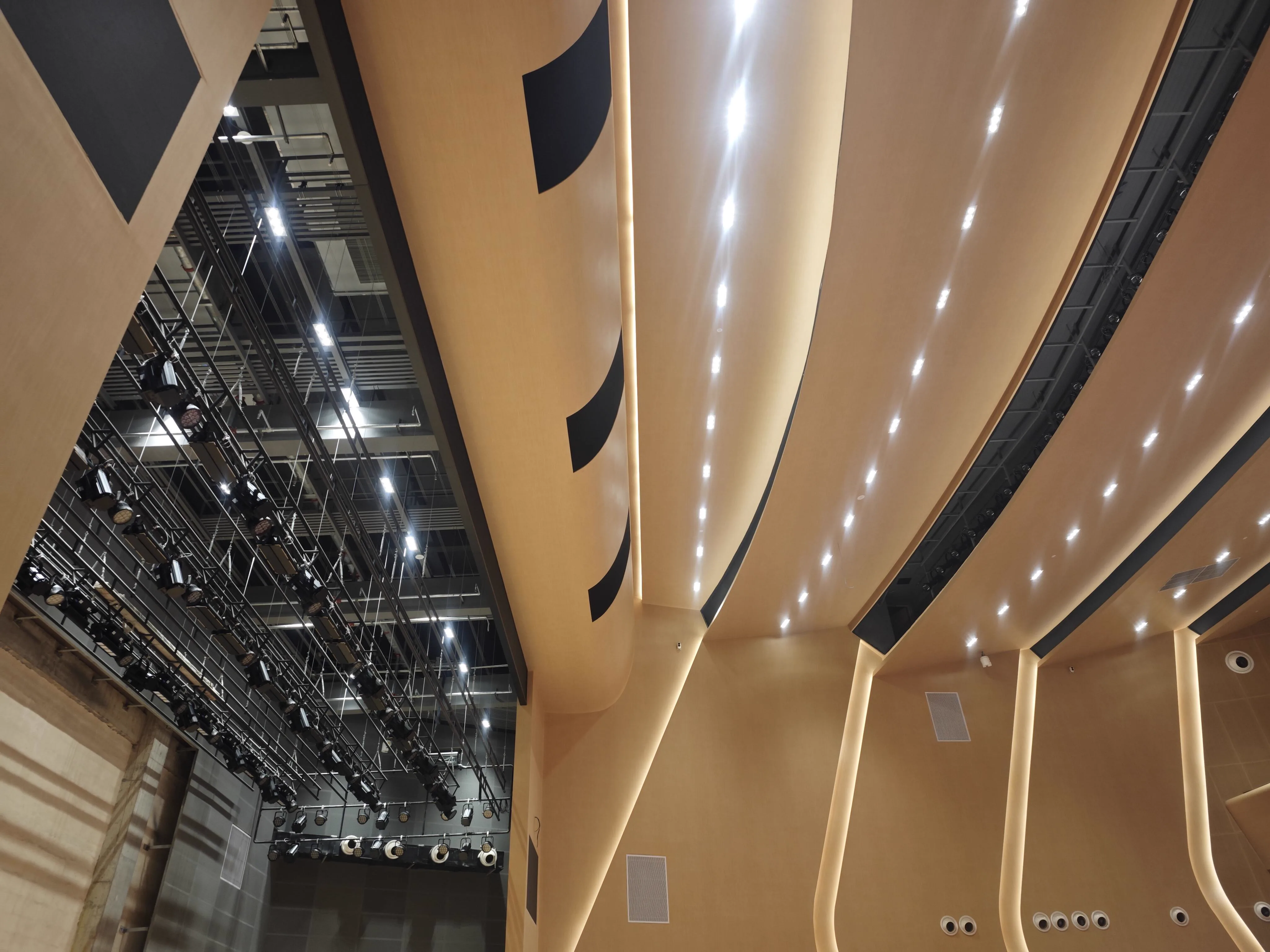
Sound Bridge Main PA (Center Cluster): A Left-Center-Right (LCR) cluster of professional loudspeakers is completely concealed within the sound bridge structure above the proscenium. The center channel primarily handles speech reinforcement, while the left and right channels handle music signals and dictate the soundstage width.
Image Localization Speakers: Because the sound bridge is positioned relatively high, sound perceived by distant audiences can feel as if it is "floating" upwards. To counteract this, localization speakers were installed at an appropriate height on the side walls near the proscenium. Using precise digital delay processing, the perceived sound image is "pulled down" to the stage level, ensuring that the audience's visual and auditory focuses align.
Front Fill Speakers: Audiences in the very front rows often sit in the acoustic shadow zone or outside the primary coverage angle of the main PA, which compromises speech intelligibility. To solve this, compact front fill speakers were flush-mounted into the stage lip to specifically cover the first few rows, eliminating acoustic blind spots.
Subwoofer System: To provide the low-frequency dynamics required for musical performances and video playback, subwoofers are hidden within acoustic niches at the bottom sides of the proscenium. This layout saves space and ensures excellent phase alignment with the main array.
Seating Area and Sound Field Coverage
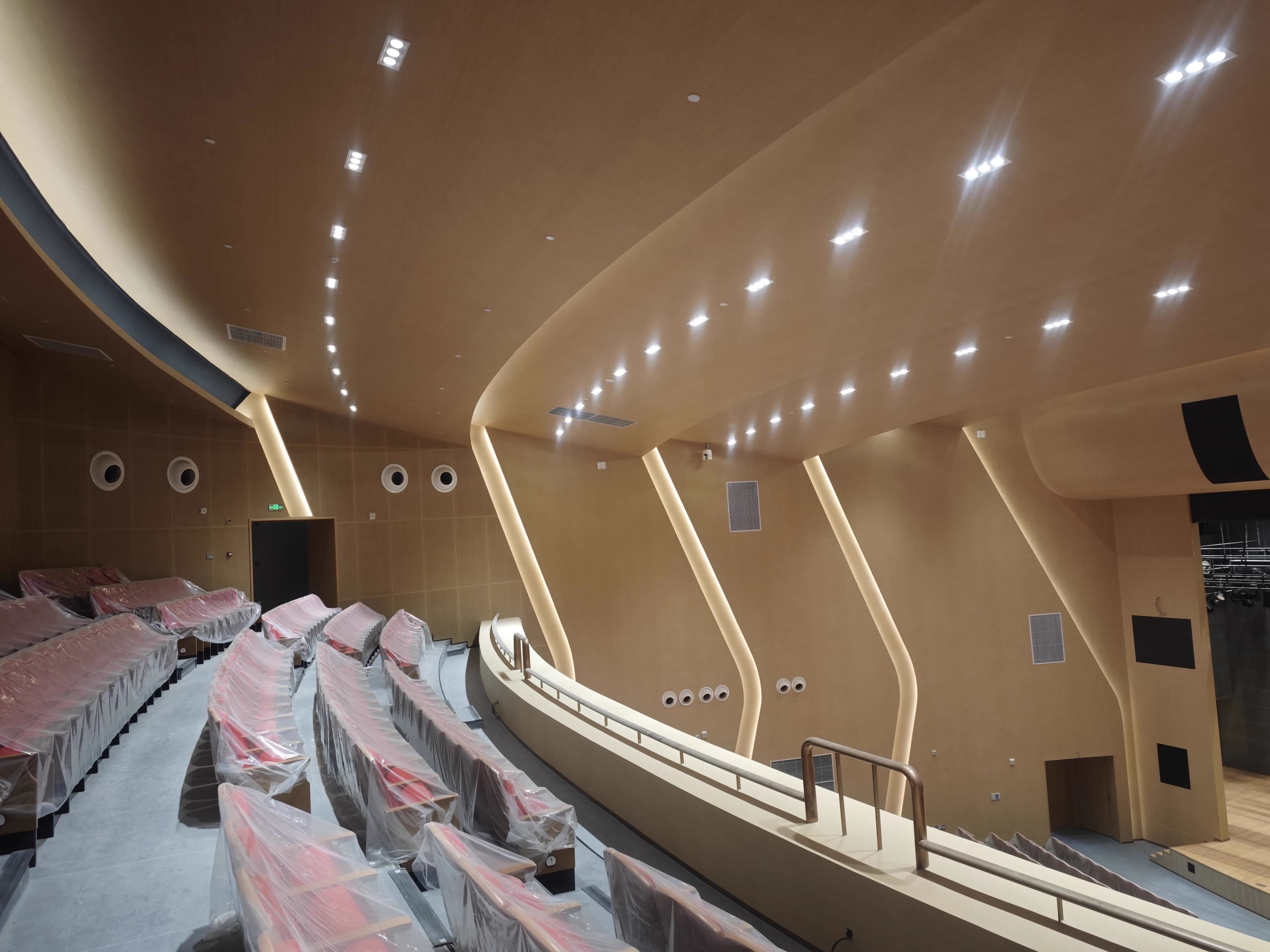
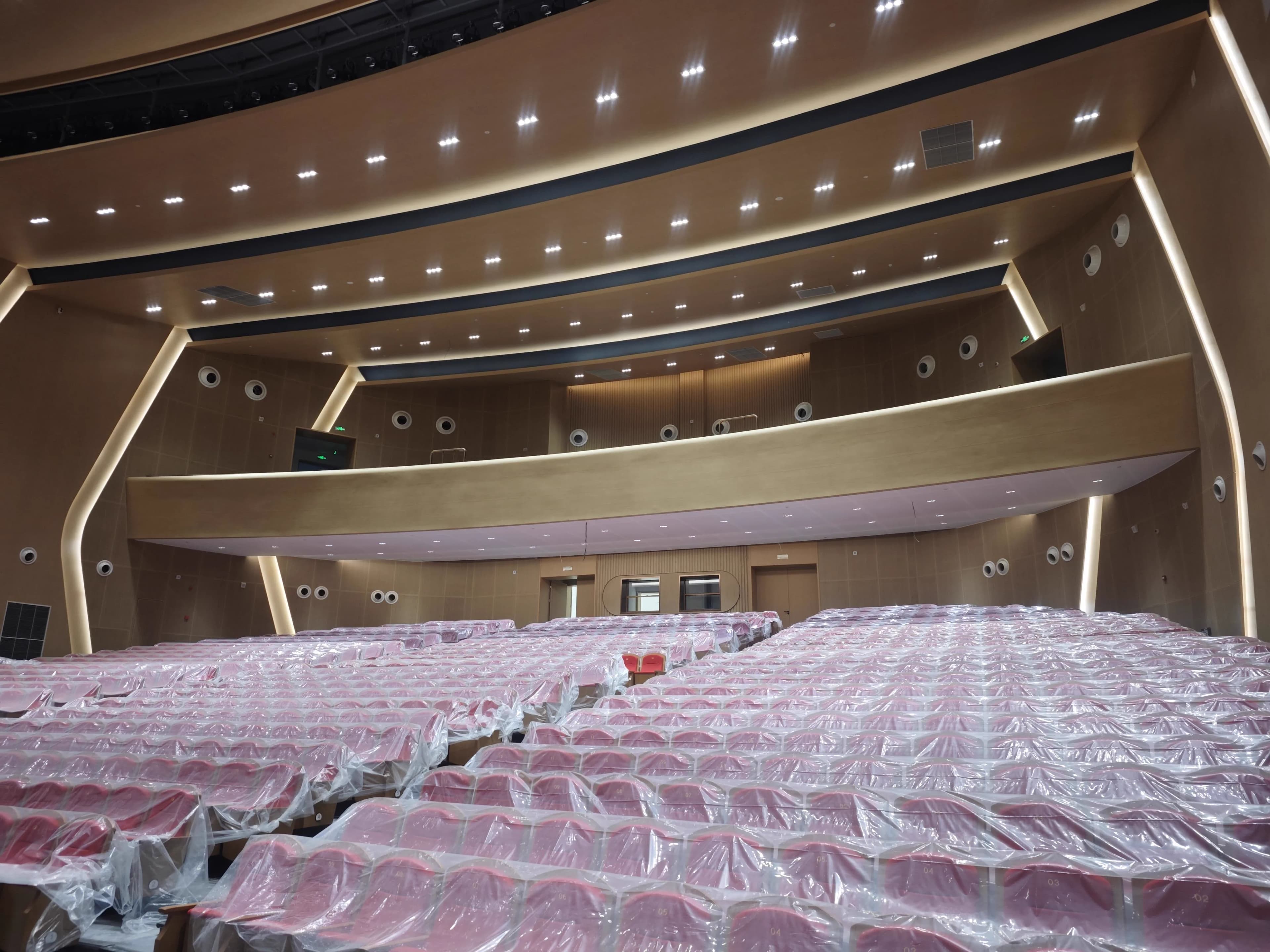
The seating layout follows the principle of equal sound pressure coverage. The red fabric seats not only provide ergonomic comfort but also offer porous sound absorption, helping to maintain a stable reverberation time regardless of audience capacity.
The slope of the second-floor balcony was rigorously calculated to ensure that sound waves reach the very last row without physical obstruction.
LED Display and Lighting
The main stage is equipped with modern AV hardware to accommodate diverse event formats. A large, ultra-high-definition LED screen is installed at the rear of the stage as the primary visual backdrop.
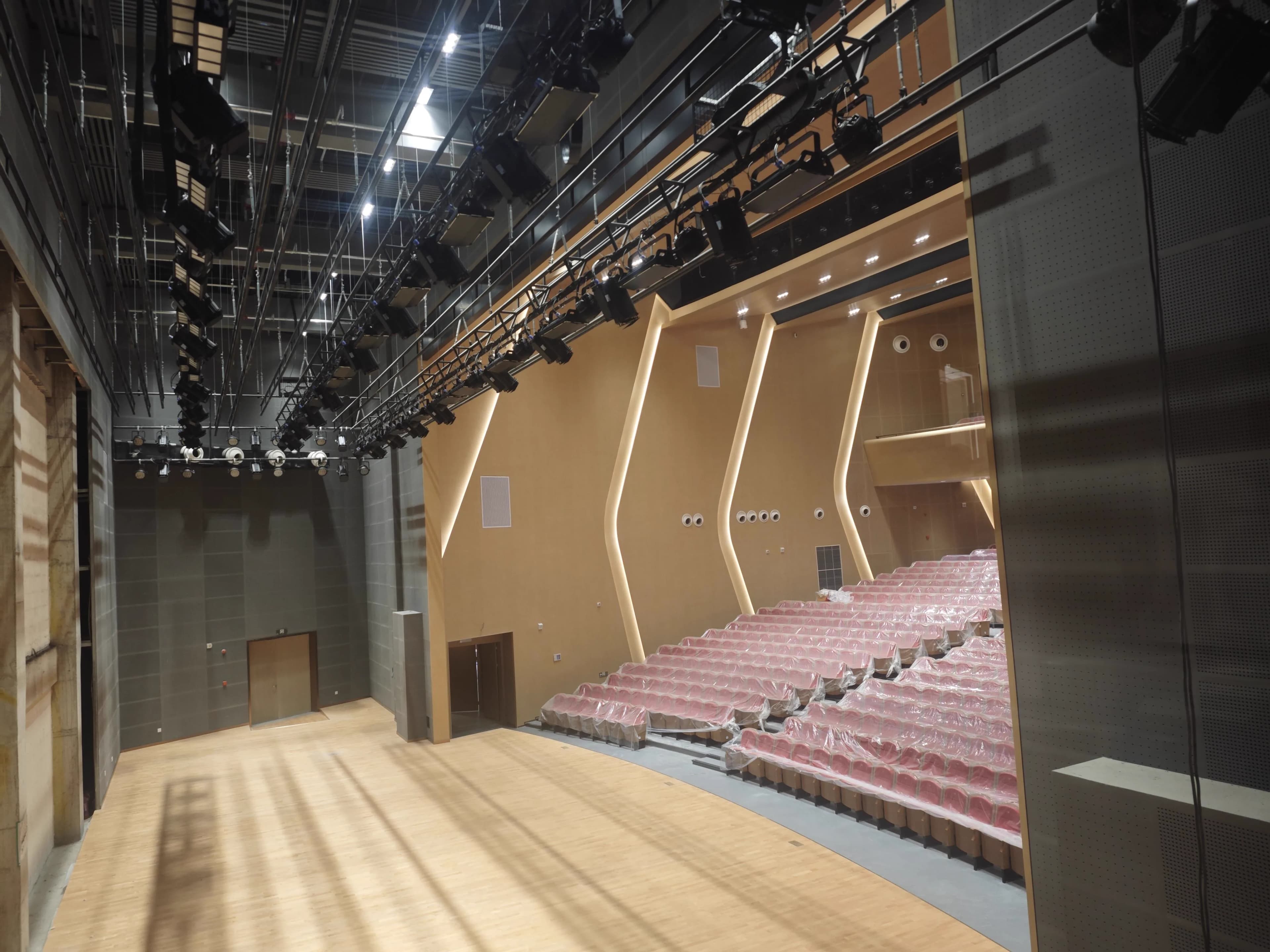
Above the stage, the mechanical lighting truss system supports professional front and top lighting fixtures. Viewed from the upper side angles, the dense catwalks and control cabling provide the necessary hardware foundation for complex, multi-scenario transitions.
Conclusion
This project was successfully delivered through standardized spatial planning, scientific acoustic structural design, and multi-dimensional PA system integration.
The combination of wood-grain and perforated aluminum panels practically resolved the reflection and absorption challenges inherent in large spaces. The precise configuration of the sound bridge, front fills, localization delays, and subwoofers ensures full-field uniformity and a natural listening experience, culminating in a highly functional and acoustically compliant modern auditorium.