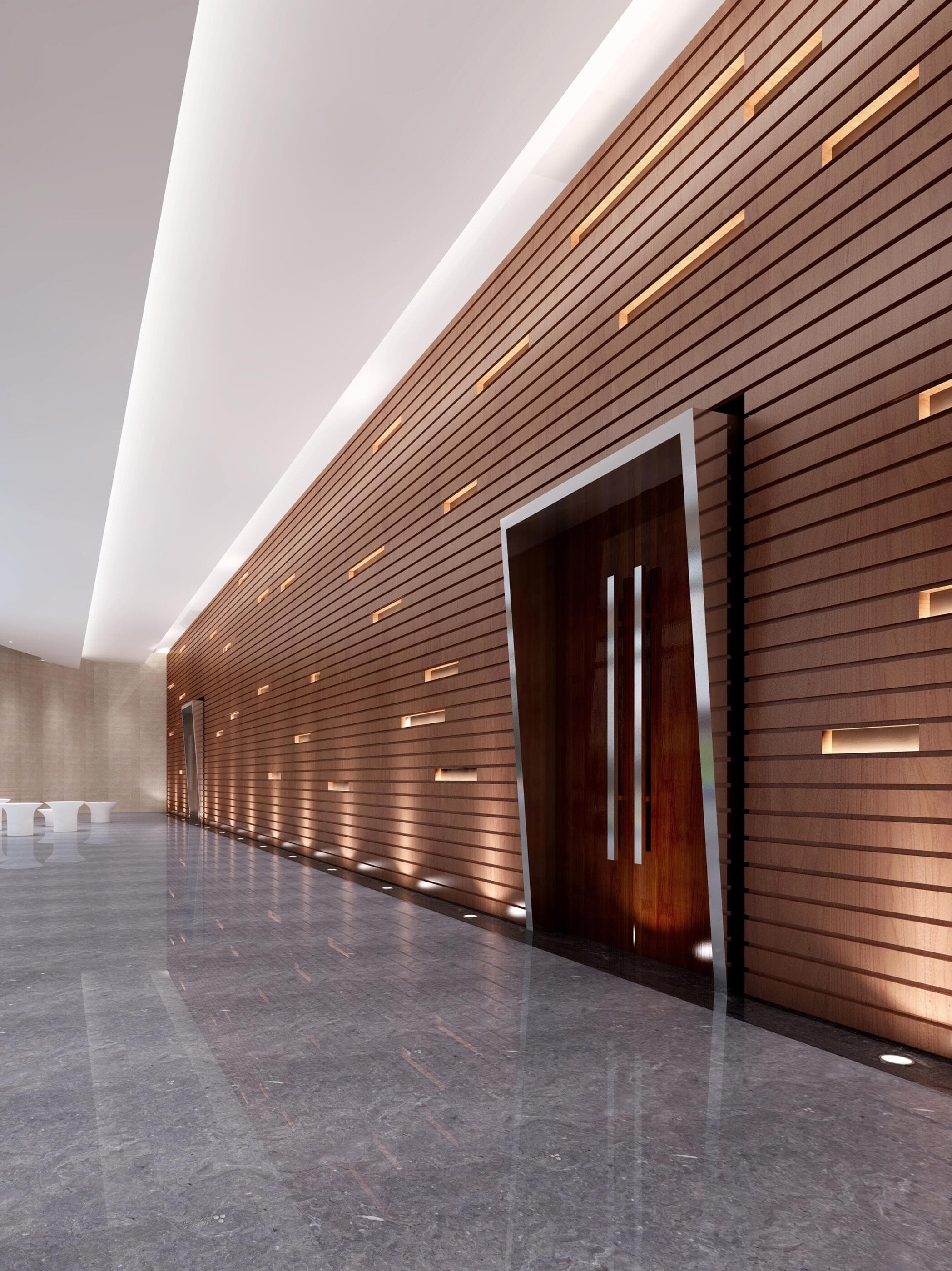
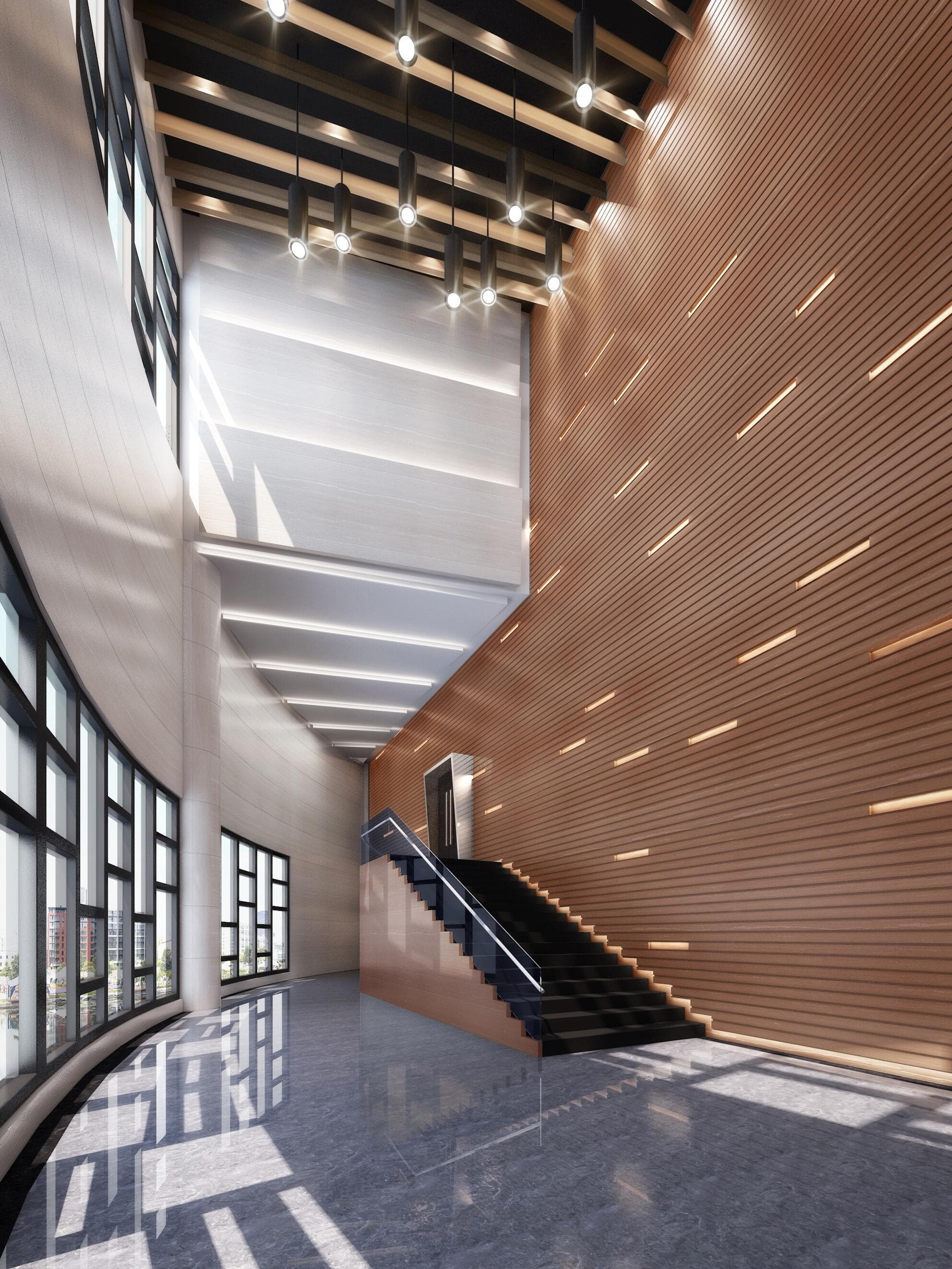
Project Overview and Design Vision
In the trend of educational architectural complexes, the school multi-purpose hall has evolved into a "mission-critical" space hosting academic exchanges, theatrical performances, and high-frequency assemblies. For this project, a full-link system integration and acoustic design optimization was executed for the multi-purpose hall at Chongqing No. 18 Secondary School.
Facing the challenges of sound focusing and long reverberation common in large-span spaces, the engineering team pursued not only precision coverage in electro-acoustic architecture but also built a professional performance vessel with high certainty and acoustic comfort through the deep reconfiguration of the physical properties of building interfaces.
Multi-Component Material Coupling and Geometric Reflection Optimization
The core of the acoustic design for this project lies in the scientific arrangement of "multi-component materials" to achieve balanced control of sound energy across the full frequency spectrum.
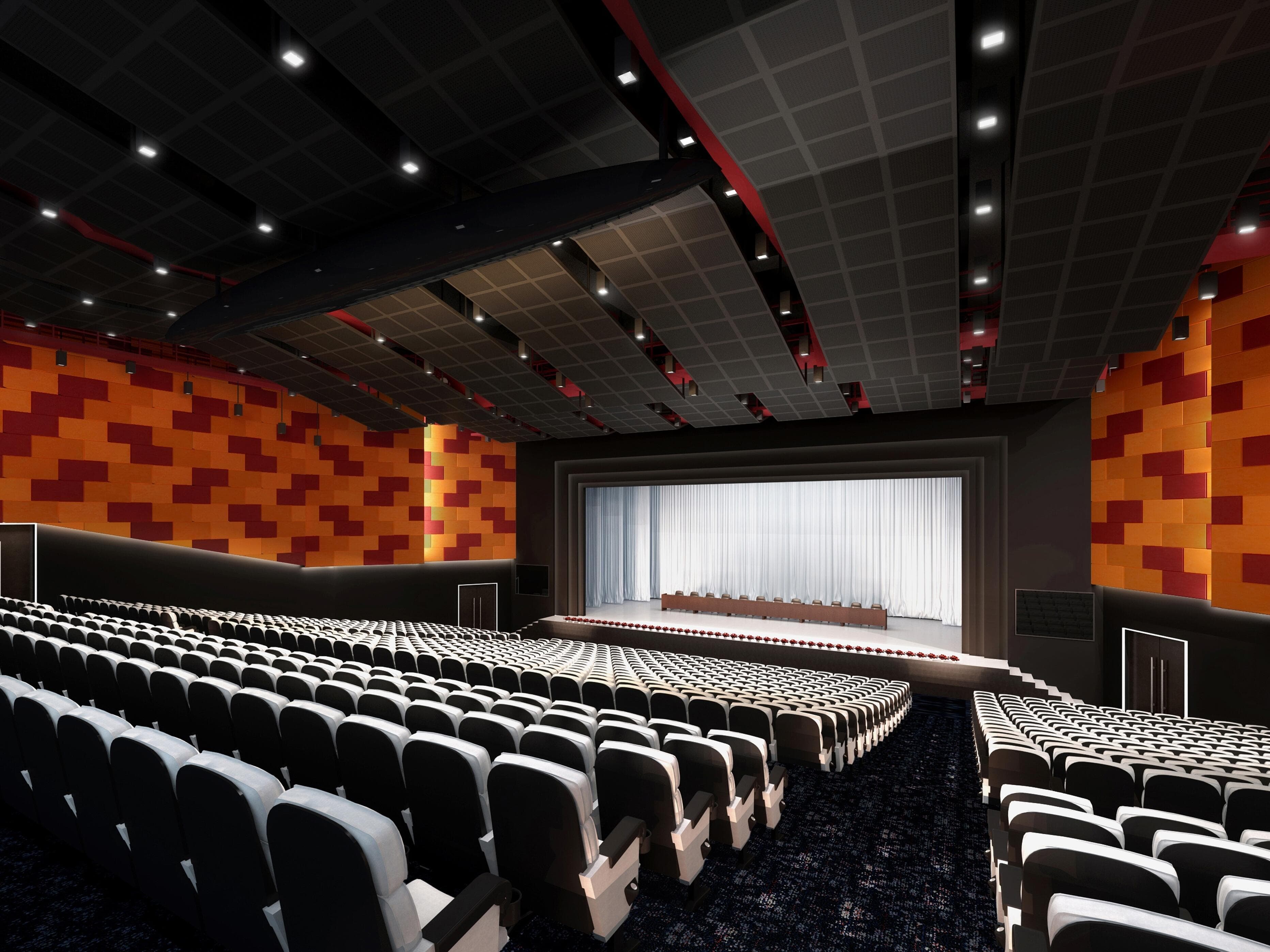
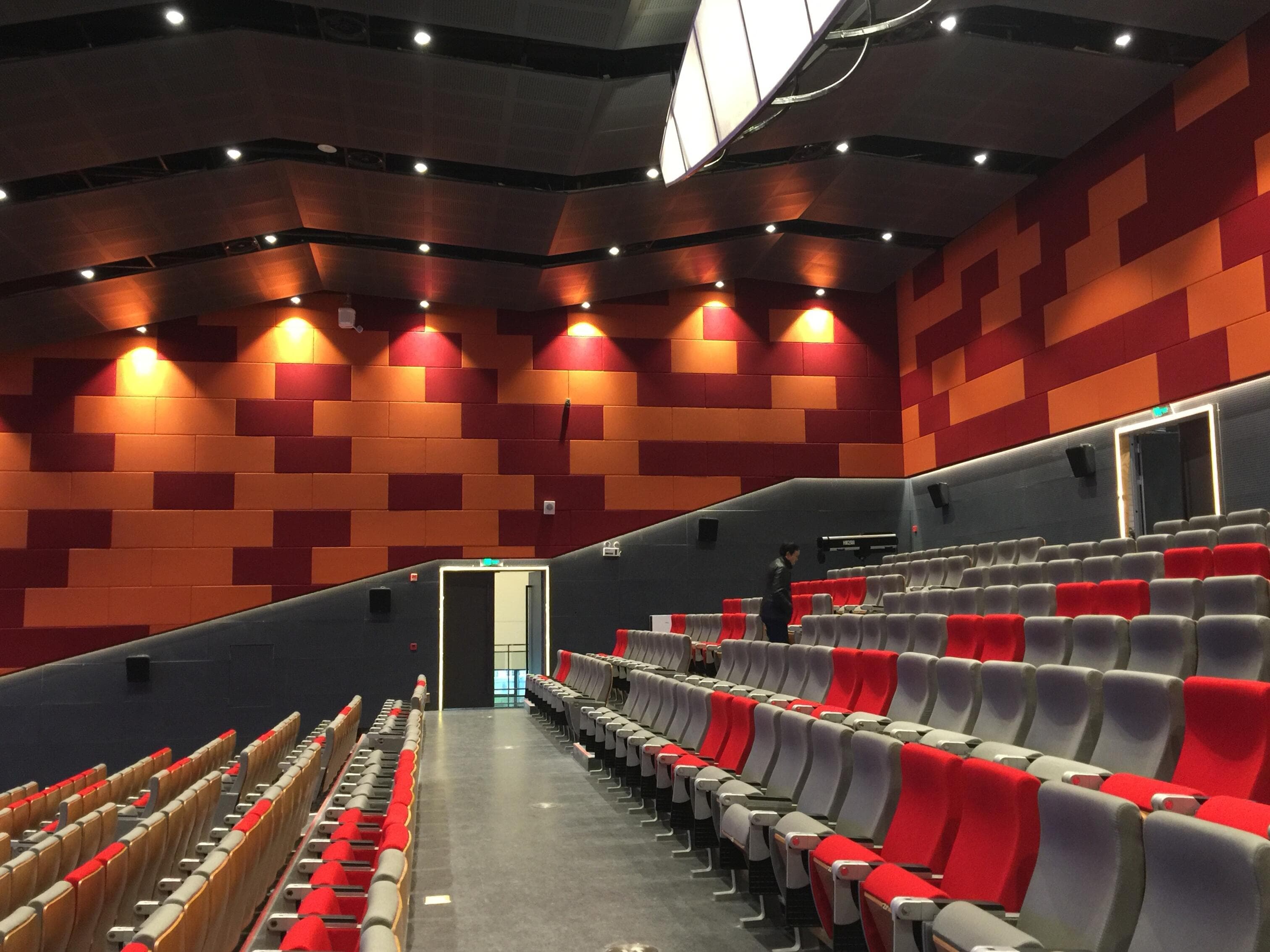
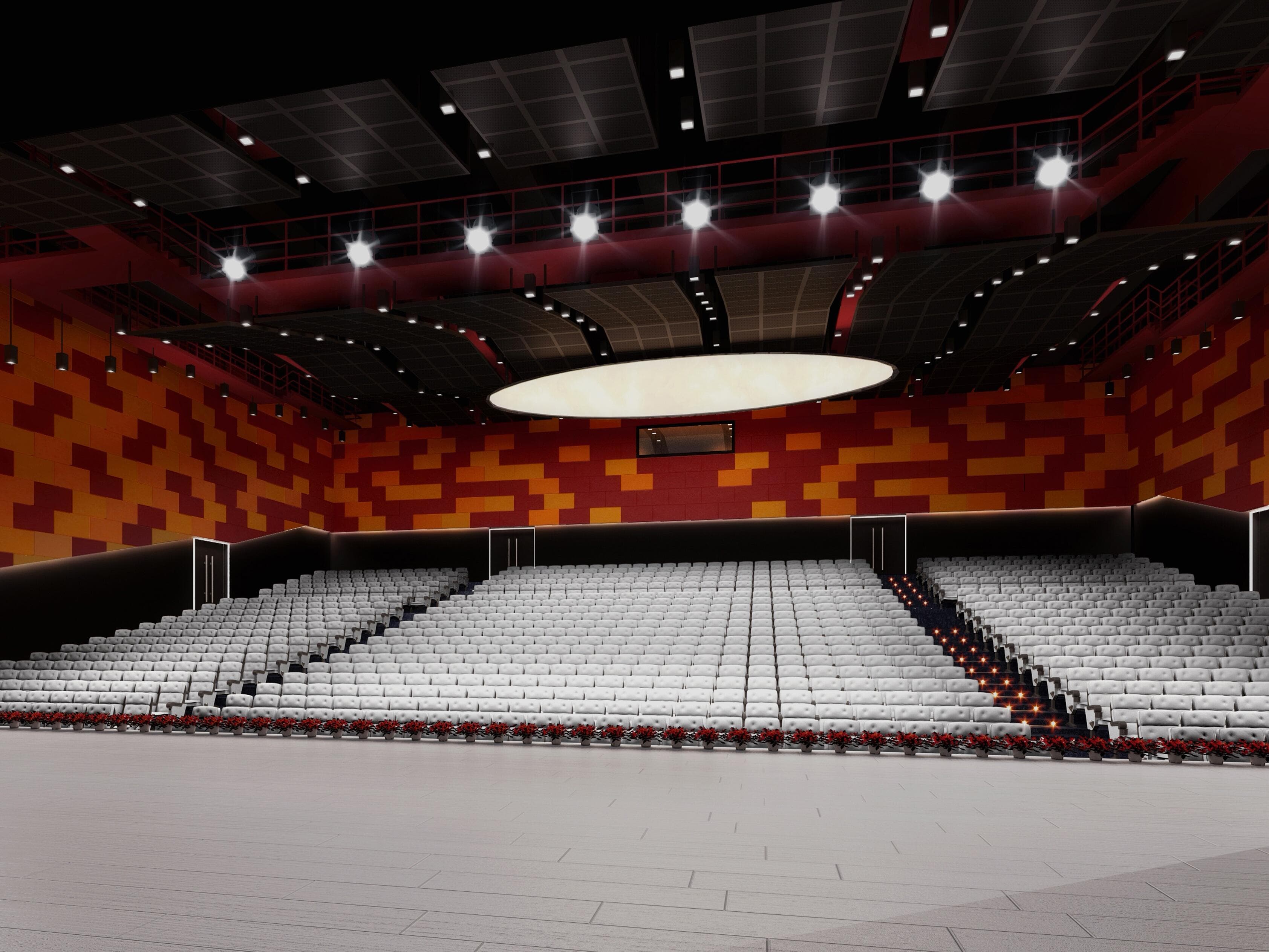
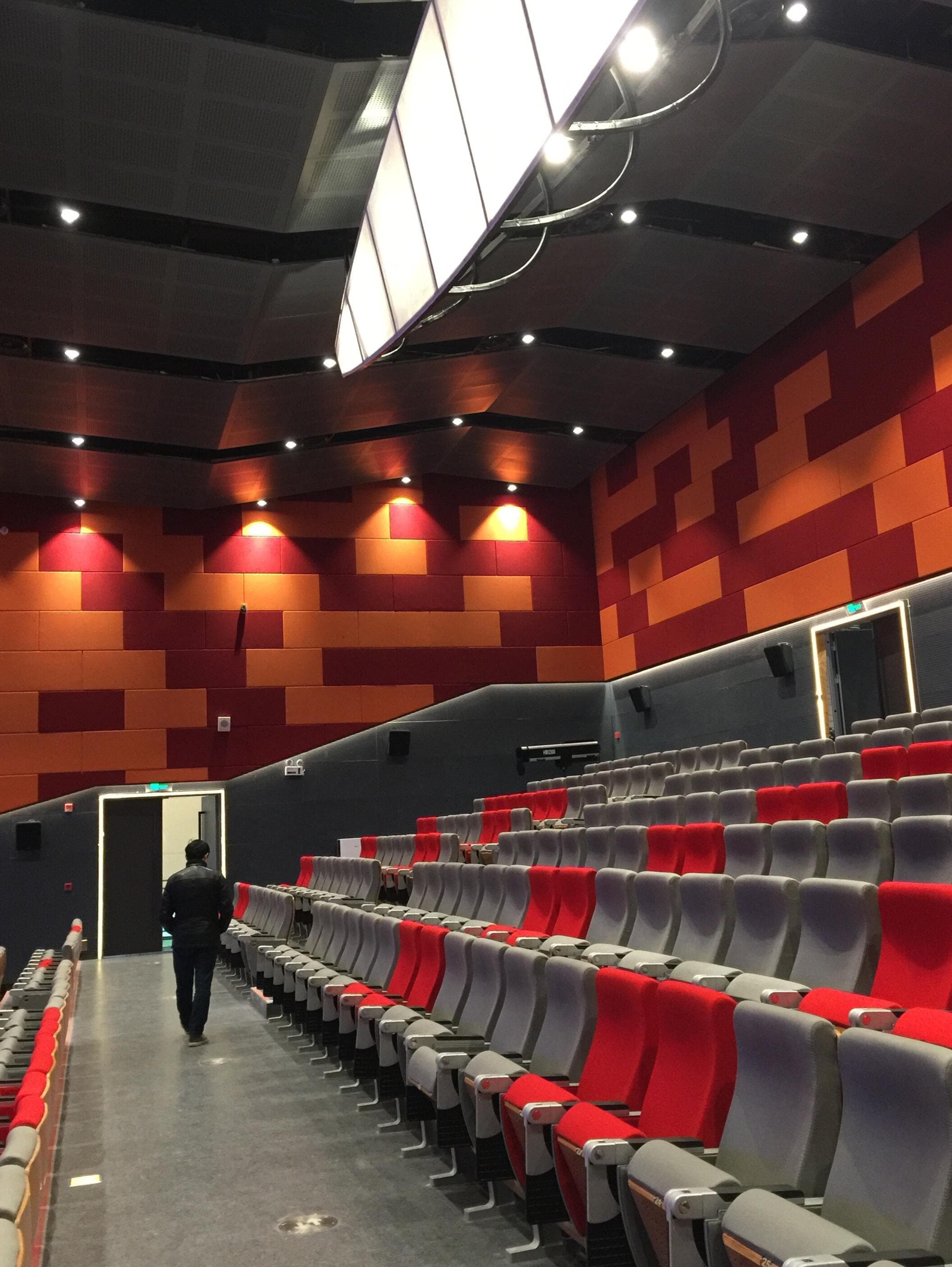
Modular Acoustic Wall Arrays: The upper sections of the auditorium side walls utilize vibrant geometric acoustic soft packs. These are not merely decorative; they form a non-uniformly distributed "modular acoustic impedance array" through various color modules, effectively disrupting reflection paths between parallel walls. The lower sections of the walls employ a composite structure of high-strength perforated aluminum panels and acoustic cotton, providing robust physical protection while utilizing the principle of perforated resonance to enhance the absorption of mid-to-low frequency noise.
Ceiling Geometry and Reflection Control: The ceiling area also adopts a structure of perforated aluminum panels and acoustic cotton, echoing the walls. Unlike traditional suspended ceilings, the morphology and geometric distribution of the ceiling underwent rigorous computer acoustic simulation and mathematical calculation. This specific geometric orientation is designed to direct sound waves from the stage toward the middle and rear of the auditorium through precisely engineered tilt angles. By increasing "early reflections," the design enhances speech intelligibility and sound thickness, achieving an optimal listening balance point.
Visual Distribution and Electro-Acoustic Integration Architecture
To ensure efficiency for both educational lectures and artistic performances, the AVL system adopts a highly flexible topological design.
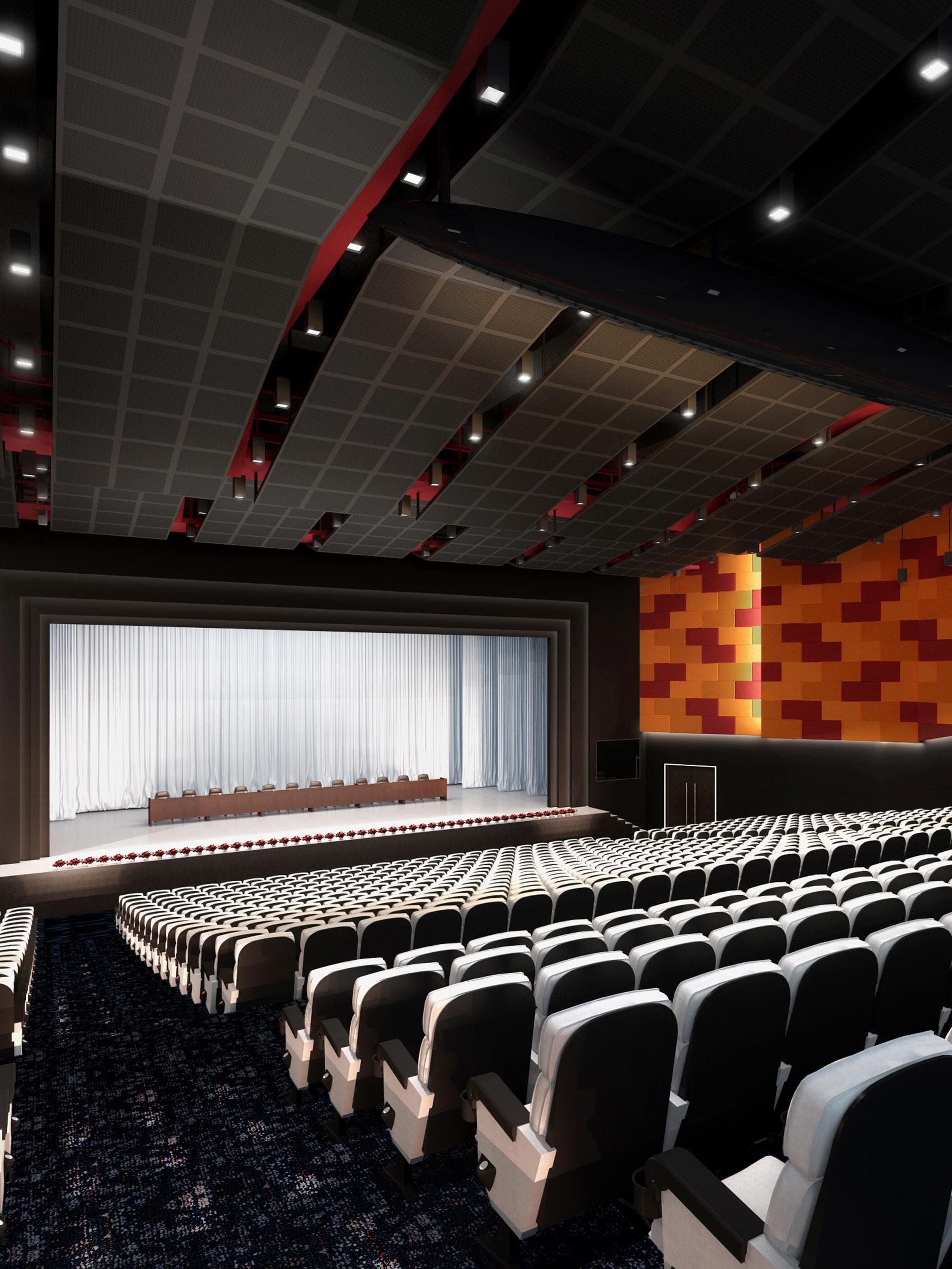
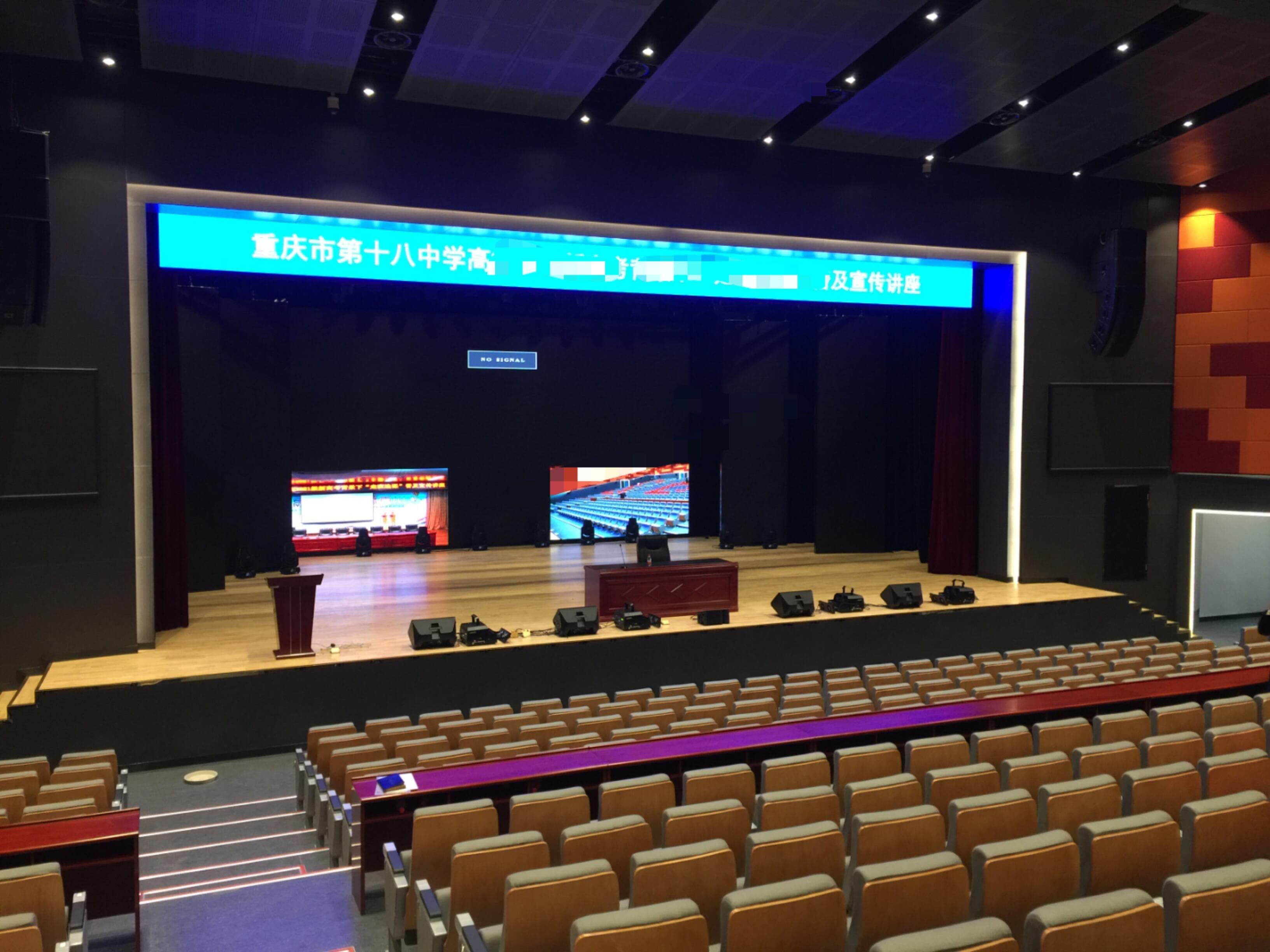
Distributed Visual Matrix: An asymmetric distributed LED display system is deployed in the stage area. An ultra-wide LED banner screen above the stage proscenium is dedicated to presenting meeting themes and core information, with high pixel density ensuring rigorous and clear typography. Meanwhile, the dual-screen linkage in the stage background provides broad visual extensibility for multimedia performances.
Audio Image Localization and Fill Strategy: In addition to the suspended main PA arrays, high-power monitor speakers are densely arranged at the stage lip. This layout, combined with DSP phase alignment technology, ensures that speakers on stage receive real-time audio feedback, while keeping the audio image localization for front-row audience members consistently aligned with the stage plane, eliminating "audio-visual decoupling".
Sightline Clearance and Ergonomic Integration
The quality of the viewing experience depends not only on acoustics but also on "unobstructed" visual accessibility.
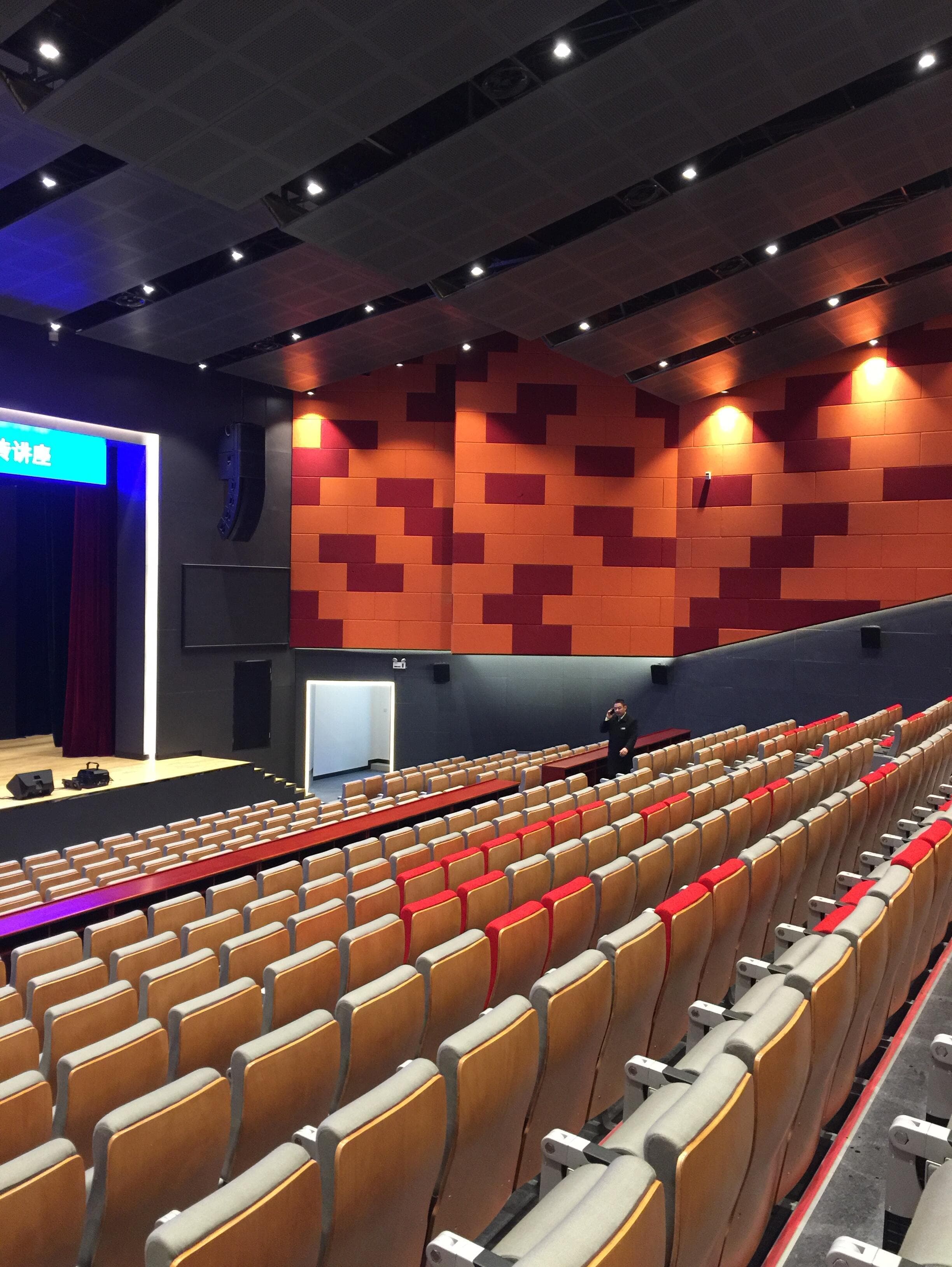
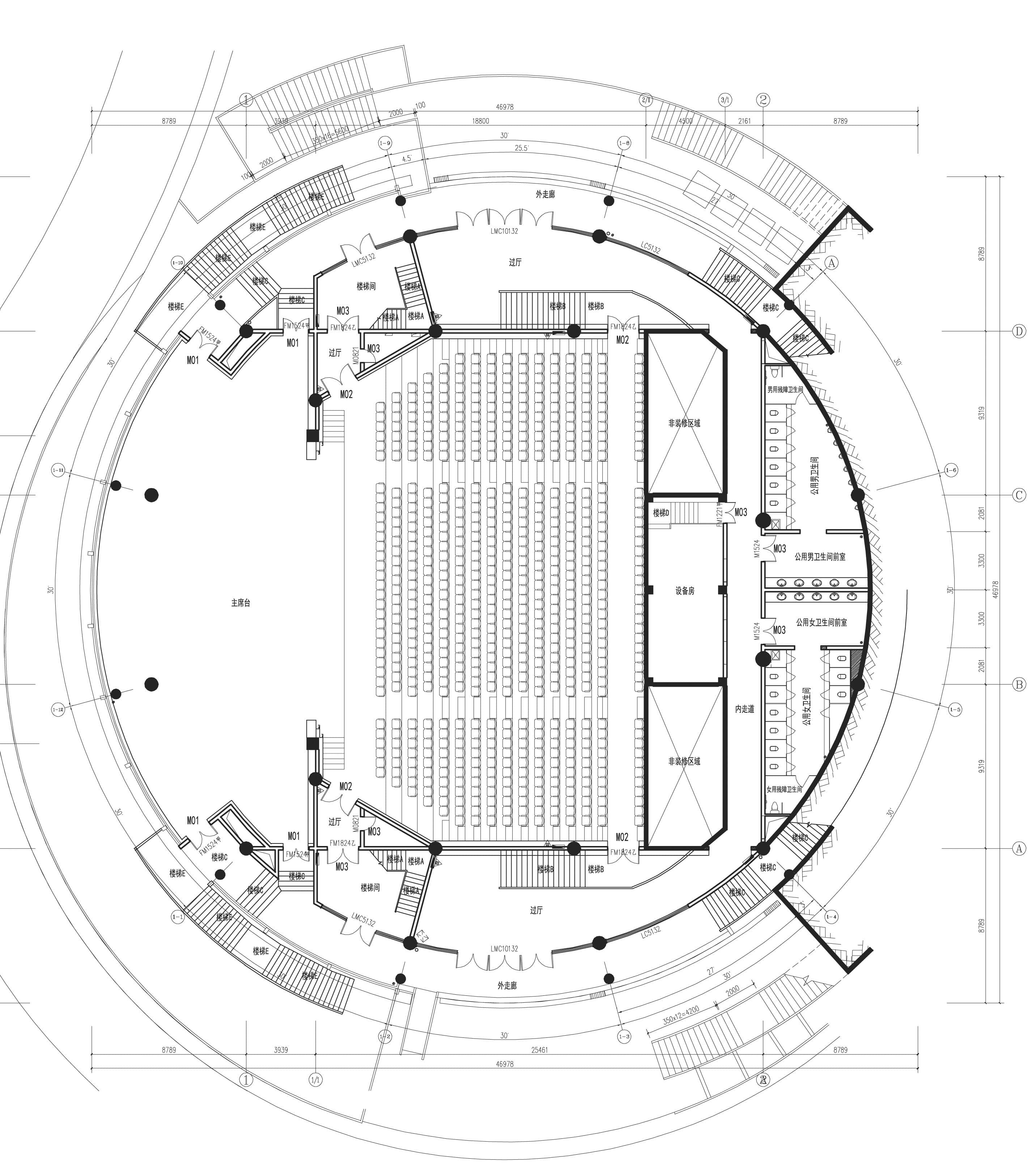
C-Value Sightline Verification: The audience area utilizes a standard steeply raked stadium seating structure. The spacing and elevation of every row have been verified through Sightline Clearance (C-Value) checks, ensuring that students in the rear can completely clear the heads of those in front to achieve an unobstructed view of the stage baseline.
Acoustic Seating Simulation: The theater-grade seats deployed on-site utilize fabrics with specific porosity and high-density flame-retardant sponge. During the design phase, the acoustic absorption parameters of the seats were fully integrated into the venue-wide acoustic simulation models of TYN ACOUSTICS. This ensures that the reverberation time (RT60) remains highly stable regardless of the number of students in the hall.
Conclusion
The successful delivery of the multi-purpose hall at Chongqing No. 18 Secondary School demonstrates the deep understanding of "integrated scene design" by TYN ACOUSTICS. Through the deconstruction of physical materials such as perforated aluminum panels and acoustic soft packs, along with the precise calculation of ceiling geometry, more than just a functional campus venue was delivered; it is a high-performance digital space where acoustic physical performance perfectly aligns with architectural aesthetics.