
01. Executive Summary
The SDVoE versus Dante AV decision is not fundamentally a debate about branding. It is a debate about network physics, infrastructure cost, and whether the venue is paying for performance the audience can actually perceive.
AV-over-IP is now baseline infrastructure for modern theaters, auditoriums, and multi-purpose venues. Once video, audio, and control converge onto standard Ethernet, owners gain extraordinary flexibility in reconfiguration and routing, but they also inherit difficult decisions about switch capacity, uplink design, and long-term operational cost.
The market's two dominant camps approach that problem from opposite directions. SDVoE embraces 10 Gigabit transport to chase zero-frame latency and mathematically lossless image quality, while Dante AV compresses more aggressively so it can remain inside a 1 Gigabit ecosystem tightly linked to Dante audio.
Core Conclusion
The right choice is rarely the most extreme specification on paper. The right choice is the network mathematical model that aligns with the venue's real operating scenarios and lifecycle total cost of ownership.
- SDVoE trades 10G bandwidth for minimal latency and near-uncompromised image transport.
- Dante AV trades codec efficiency for dramatically lower switching, uplink, power, and cabling costs.
- For most venues, reallocating budget to displays, loudspeakers, and room acoustics creates more audience value than overbuilding the transport layer.
1.1 AV-over-IP as Foundational Infrastructure
In contemporary venue design, AV-over-IP is no longer a speculative upgrade path. It is the standard way to distribute high-definition video, professional audio, and control data across rooms that must constantly change function.
That flexibility, however, creates specification anxiety. Owners and consultants are often trapped between fear of under-designing the system and fear of wasting budget on infrastructure that exceeds actual artistic or operational need.
1.2 Returning to Bandwidth Math
The cleanest way to cut through vendor rhetoric is to return to first principles. How much data does the stream generate? How many streams aggregate at the edge? What uplink capacity is needed to keep the topology non-blocking? And what does that imply for optics, switch backplanes, power budgets, and concealed cabling?
02. Decoding the Two Architectures
SDVoE and Dante AV are not just two protocols. They are two different engineering philosophies about where compromise should live.
2.1 SDVoE: The Hardcore 10G Approach
SDVoE is built around a strict 10 Gigabit foundation. Its philosophy is uncompromising transport: keep compression shallow, preserve visual integrity, and minimize latency until the signal behaves like a virtual extension of a traditional matrix switcher.
- The architecture assumes dedicated 10GbE capacity as the normal cost of doing business.
- Shallow compression preserves image fidelity but leaves very little spare transport headroom on each link.
- The reward is sub-frame, near-zero-latency behavior suited to workflows where every artifact or frame of delay matters.
2.2 Dante AV: The 1G Ecosystem Strategy
Dante AV takes the opposite stance. Rather than demanding wider physical pipes, it relies on efficient codecs so video can live inside the same practical, affordable 1GbE environment already familiar to most IT and pro-audio teams.
Its greatest advantage is not just lower bandwidth. It is ecosystem cohesion. Video streams can be managed alongside large Dante audio deployments within a shared timing and routing logic that operations teams already understand.
03. The Brutal Bandwidth Math
Once the discussion shifts from marketing language to switch backplanes and uplinks, the engineering consequences of each architecture become much harder to ignore.
3.1 The Single Stream Equation
A single uncompressed 4K60 4:4:4 video stream sits around 12 Gbps in theoretical raw form. SDVoE trims that stream only enough to fit inside a 10G link, typically leaving the cable almost entirely consumed by one video path.
Dante AV compresses far more aggressively, often reducing equivalent 4K transport into the rough range of 400 to 800 Mbps. That leaves meaningful headroom on a 1G link for control traffic and large numbers of professional audio channels.
- With SDVoE, one physical port is effectively dedicated to one premium video stream.
- With Dante AV, the same class of signal occupies only part of a 1G link, not all of it.
- That difference changes every downstream decision about access-switch density and uplink aggregation.
3.2 The Uplink Bottleneck Trap
The real hidden cost appears when many streams aggregate at the stage edge. Ten simultaneous SDVoE-style flows can push aggregate demand toward the 100G class once non-blocking transport is required between the edge and the core. That immediately drags the design into expensive optics, enterprise switching tiers, and a different procurement universe.
By contrast, ten Dante AV-style streams typically remain below a 10G aggregate uplink envelope. That allows the same venue zone to operate with commodity 1G access switching and a far more affordable 10G uplink path back to the control room.
05. Real-World Matching
No protocol wins universally. The real design question is which architecture matches the venue's genuine operating boundary instead of its aspirational marketing checklist.
5.1 Scenarios Where SDVoE is Justified
- Medical and diagnostic teaching environments where any compression artifact could compromise interpretation.
- Broadcast production workflows involving intensive keying, rendering, and frame-accurate switching chains.
- Massive LED-wall processing environments where microsecond-level synchronization and ultra-low latency are mission-critical.
In those cases, the 10G burden is not over-engineering. It is simply the real cost of non-negotiable performance requirements.
5.2 Scenarios Where Dante AV Makes More Business Sense
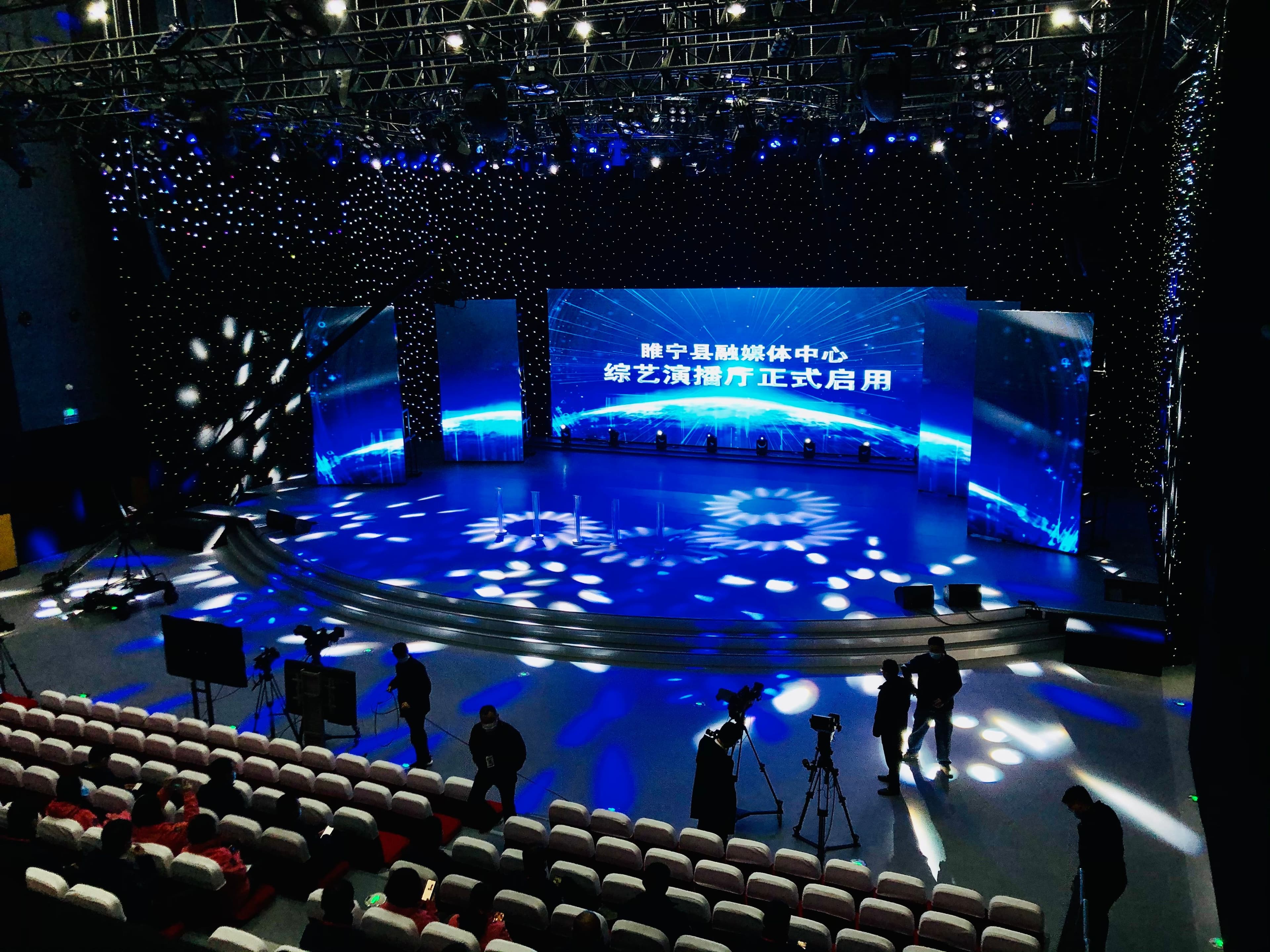
For the broader venue market, including auditoriums, theaters, conference halls, and mixed-use performance spaces, Dante AV often delivers the stronger overall business model. At normal viewing distances, audiences rarely perceive the difference between visually lossless compressed 4K and uncompressed 4K, but they absolutely feel the consequences of a budget that was misallocated away from loudspeakers, displays, or room acoustics.
- The venue can route audio and video within one familiar Dante operational ecosystem.
- Existing enterprise backbone infrastructure can often be reused instead of replaced.
- Operations, support, and staff training become simpler because the venue is not maintaining two unrelated transport worlds.
06. Conclusion
Image quality without infrastructure context is meaningless engineering theater. Real integration decisions must account for switching tiers, cabling reality, acoustic side effects, and whole-life cost.
SDVoE remains the right answer where uncompressed behavior and near-zero latency are truly mission-critical. But for most commercial venues, Dante AV's mix of 1G efficiency, ecosystem uniformity, and lower infrastructure burden produces the more rational and more profitable design.
The final lesson for owners is simple: do not spend premium capital on invisible network heroics your audience will never notice. Put that budget into the displays, sound systems, and acoustic environment they will actually experience.