
01. Introduction: The Intersection of Physical Limits and System Integration
Perfect audiovisual experiences are always built upon structural certainty. Before a venue can sound extraordinary, every suspended array, reflector, screen, and rigging point must survive the unforgiving math of physical load.
In architectural acoustics and stage-system integration, it is easy to focus on frequency response, spatial coverage, and visual spectacle. Yet every loudspeaker cluster, LED wall, acoustic module, and machinery assembly also imposes hard mechanical demands on the structure that carries it.
That is why Factory Acceptance Testing is more than a commissioning ritual. In a serious integration workflow, FAT is where structural assumptions, mechanical tolerances, and deployment envelopes are challenged under extreme laboratory conditions before they can become liabilities on site.
Why This Matters
Maximum-payload testing transforms hidden material limits into explicit engineering boundaries. It is the point where acoustic ambition meets mechanical accountability.
1.1 FAT as Pre-Site Risk Elimination
A device that powers on successfully has not yet proven itself safe. The real FAT challenge lies in understanding how components behave under physical stress, shock, deformation, and repeated load cycles. The objective is simple: expose every meaningful structural weakness in the factory, not in the theater.
02. On-Site: Extreme Pressure Testing at the Foshan Manufacturing Hub
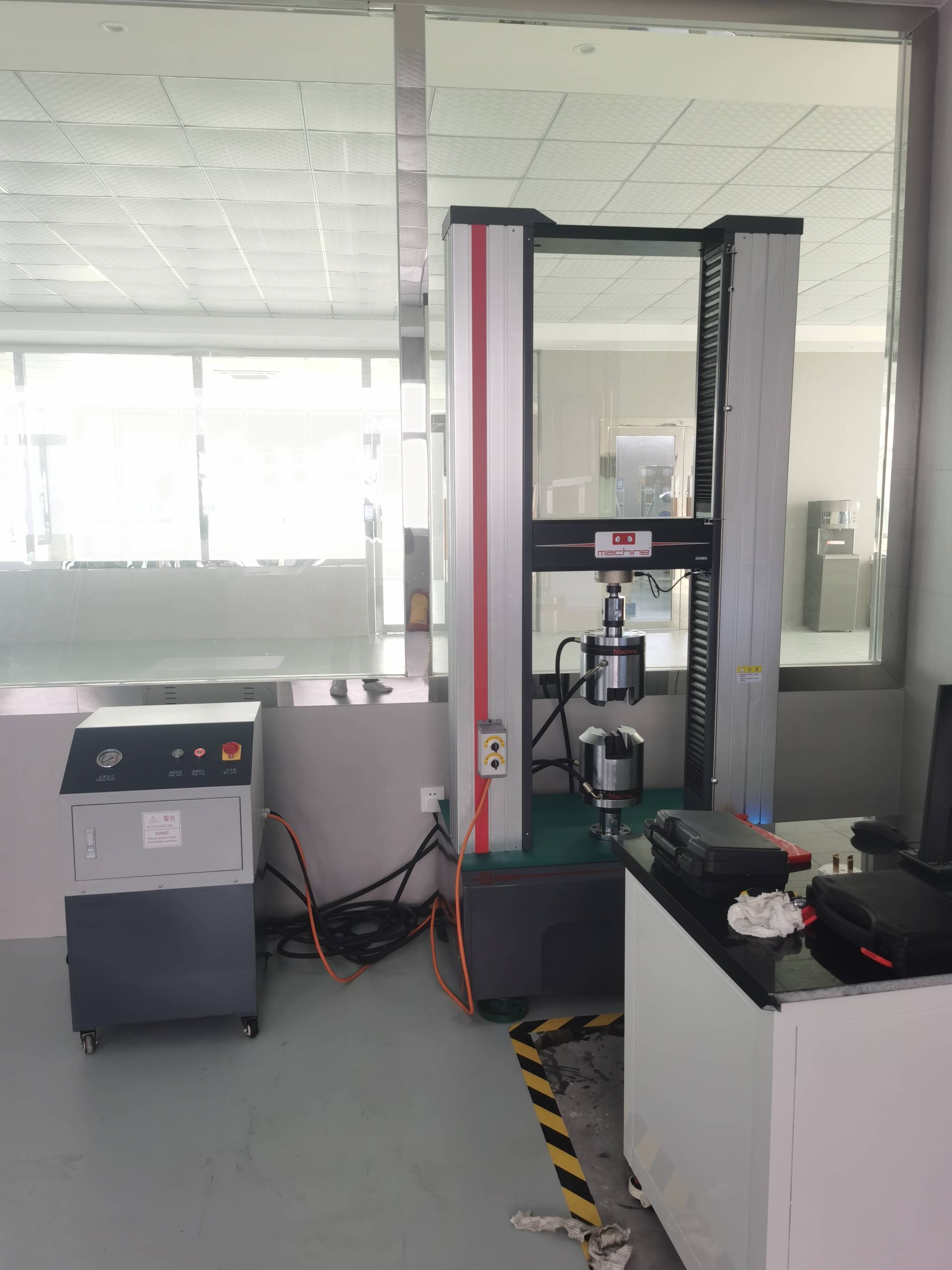
Inside the Foshan R&D facility, structural tests are monitored with the same seriousness normally reserved for signal analysis. Oscilloscopes, analyzers, and measurement tools are used to detect minute vibration signatures and the first hints of yielding long before gross failure occurs.
Even slight structural movement can become a future acoustic problem, a source of noise, or a latent mechanical hazard. That is why stress testing at this level is treated as part of system performance, not just safety compliance.
2.1 The Components Under Test
- High-density acoustic structural modules, including timber-based reflective elements that must remain stable under long-term self-weight and environmental change.
- Metal supports, truss components, line-array rigging pins, and LED-wall brackets that form the skeletal load path for heavy audiovisual systems.
- Connection hardware whose failure would not only drop capacity but also compromise geometry, alignment, and acoustic accuracy.
These are not abstract material samples. They are the actual mechanical links that decide whether integrated AV and acoustic systems remain safe and stable over years of operation.
2.2 Static Loads vs. Dynamic Loads
The lab distinguishes carefully between static and dynamic loading. Static loads simulate the long-term suspension of reflectors, panels, and loudspeaker systems over years of service. Dynamic loads simulate far more violent conditions: rapid starts and stops, inertial shock from moving machinery, and persistent low-frequency excitation transferred through rigging structures.
A component that survives static suspension may still fail under repeated dynamic stress. For that reason, full-scenario testing is the only reliable path to defining genuine deployment limits.
03. Core Data Analysis: How Shear Strength Dictates Deployment Limits
In overhead AV and acoustic engineering, catastrophic failure rarely arrives as a poetic structural collapse. More often, it appears as a connector, bolt, or pin losing the ability to resist shear.
3.1 What Is Shear Strength?
Shear strength is the resistance of a material or component to forces that try to slide its internal structure across itself. In practical terms, it is one of the most critical values for line-array pins, bracket bolts, acoustic-frame connectors, and other fasteners loaded across their axis.
When shear stress exceeds that limit, failure can be sudden and unforgiving. This is one of the most dangerous modes in engineering because the component may appear visually acceptable right up to the point of instantaneous loss.
3.2 Yield Point vs. Breaking Point
Two thresholds matter most in testing. The yield point marks the beginning of irreversible deformation, while the breaking point marks complete structural failure and total loss of load-bearing capacity.
The distinction between materials is crucial. High-density hardwood acoustic components may show little visible warning before brittle fracture, whereas metal connectors often reveal a more traceable yielding process. That material behavior directly changes how conservative the safety margin must be.
3.3 Safety Factor and Safe Working Load
Ultimate test data can never be copied directly into installation practice. Real projects must account for fatigue, environmental variation, installation quality, and unforeseen shock events. That is why the measured breaking load is divided by a safety factor to produce the Safe Working Load, or SWL.
- A 5:1 factor is commonly used for stable static suspension with predictable loading conditions.
- A 10:1 factor is the expected baseline for dynamic overhead systems, public-area rigging, and touring-grade assemblies subjected to repeated handling.
- Higher factors are justified when seismic uncertainty, critical life-safety consequences, or unusually severe operating conditions are present.
In other words, SWL is not the maximum number a component can survive once in the lab. It is the conservative engineering red line the system must respect in the field every day.
Safe Working Load Calculator
Use this tool to translate measured breaking load into a conservative deployment limit. It follows the same safety-factor logic discussed in this chapter and is intended as a planning aid, not a substitute for certified engineering review.
Safety Factor Scenario
Calculated SWL
Equivalent Load
6 adults
Engineering Rationale
Recommended minimum for moving overhead systems, stage machinery, and audience-area payloads.
04. Cross-System Applications: From Lab Data to One-Stop Integration Solutions
Laboratory stress data becomes valuable only when it changes how real systems are designed. At LYN, structural test results are converted directly into installation standards, bracket revisions, rigging strategy, and system-level coordination rules.
4.1 Concealed Acoustic Material Installation
Breaking-load data from high-density timber modules allows concealed support systems to be redesigned with more precision. Instead of using bluntly oversized brackets everywhere, fasteners and concealed metalwork can be selected more intelligently while still preserving a high safety factor.
The result is not just a safer assembly. It is also a cleaner one. Acoustic modules can float more elegantly in the space without forcing visually heavy support language into the architecture.
4.2 Anti-Resonance Rigging for AV Systems
Dynamic load testing is especially valuable for line arrays and large LED assemblies. Low-frequency vibration can accelerate fatigue and excite unwanted structural behavior in conventional rigid connectors.
Using dynamic test results, custom damping-aware rigging hardware can be developed to increase effective load security while also reducing resonance transmission, screen jitter, and vibration-related noise.
4.3 Transient Stress in Stage Machinery
Stage machinery experiences the harshest transient forces in the integrated system. Emergency braking, high-speed starts, and directional reversals can generate severe momentary stress even when average operating loads appear acceptable.
Yield-point data from alloy testing therefore feeds directly into shaft, wire-rope, and transmission selection so the system remains inside the green zone of SWL even during the worst motion events.
05. Conclusion and Future Outlook
System integration is never just the stacking of premium equipment. It is the disciplined coupling of acoustics, mechanics, material science, and spatial performance under measurable safety logic.
Every maximum-payload test at the Foshan manufacturing hub turns hidden structural risk into usable engineering knowledge. That knowledge becomes better rigging standards, safer deployment envelopes, and clearer decision-making for future projects.
The practical next step is straightforward: deployment manuals, installation details, and field procedures should be continuously updated to reflect the latest measured SWL data, not legacy assumptions inherited from older projects.