
Grand Theater Overview and Acoustic Parameters
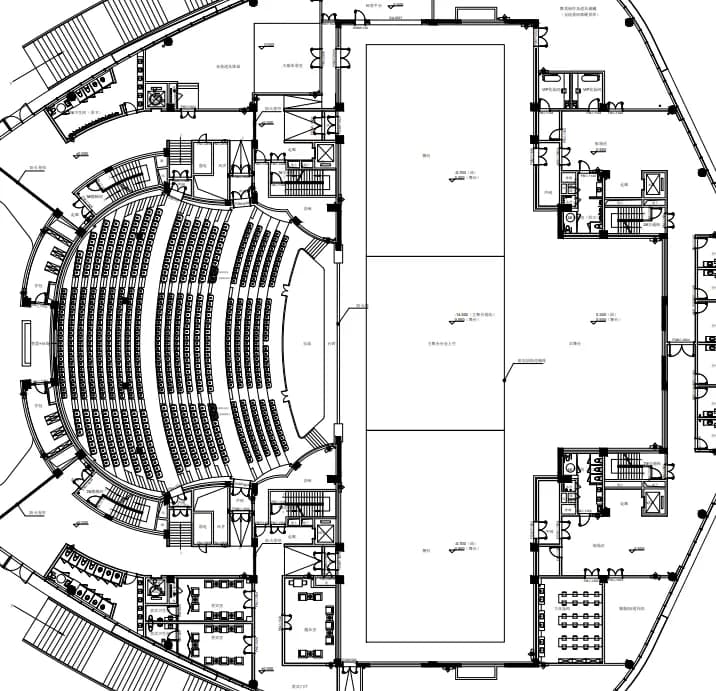
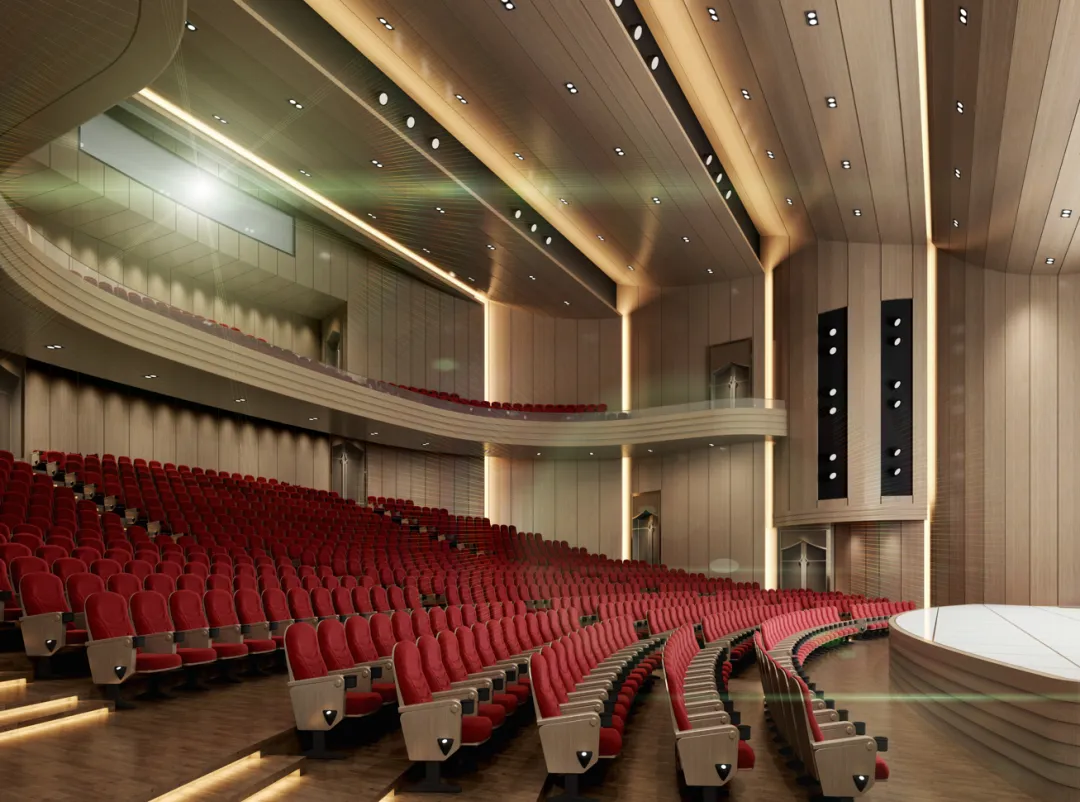
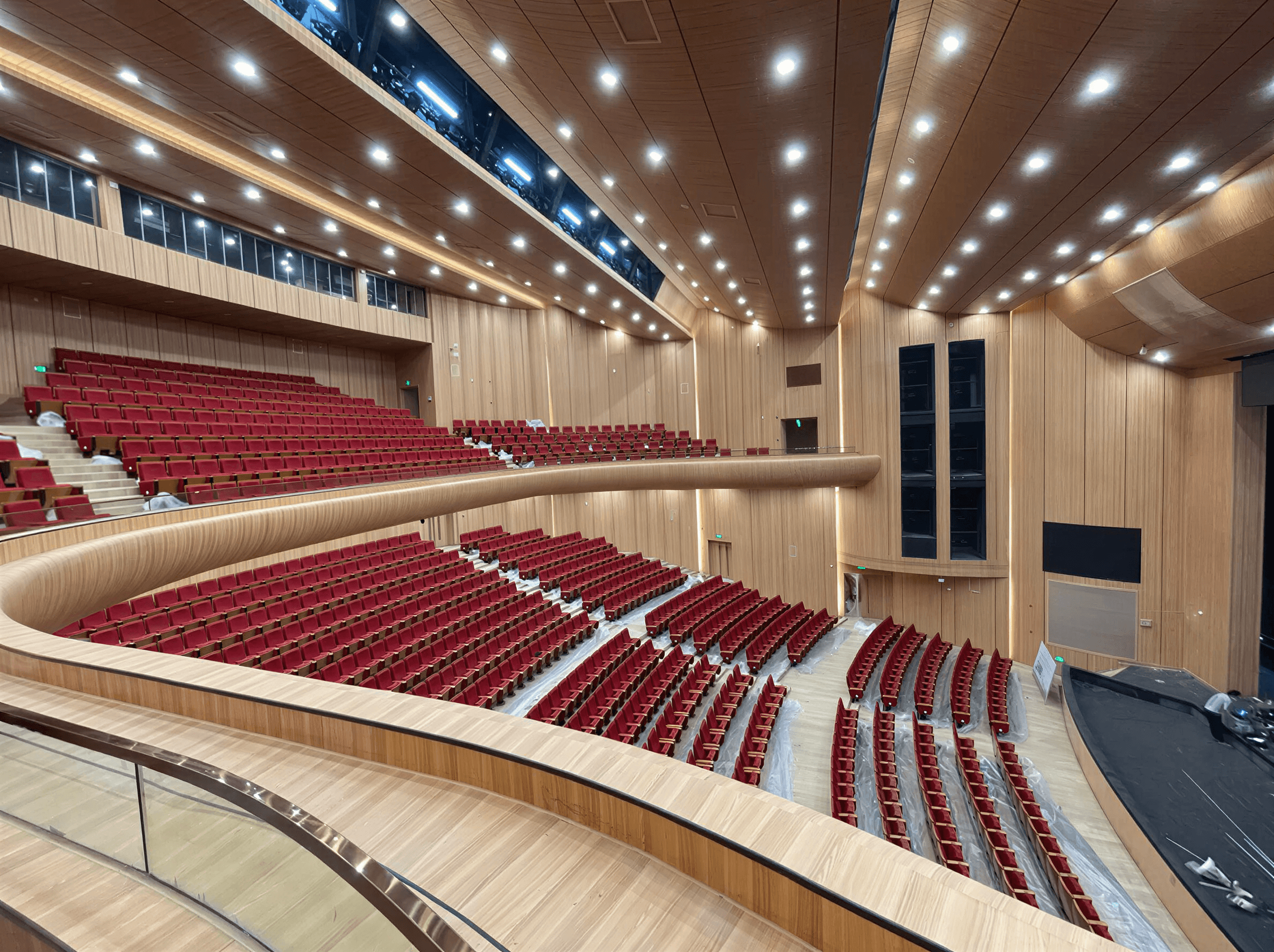
The Grand Theater has a seating capacity of 1,200 and is positioned as a Class B theater. It is equipped for large-scale performances, comprehensively accommodating opera, dance drama, theater, and conferences, while also catering to concert functions. The auditorium adopts a horseshoe shape, measuring approximately 32m in length, 29m in width, and 13.5m in height, providing a volume per seat of 8.8m³/seat.
Both the geometric form and volume of the auditorium are highly suitable. The stage utilizes a typical inverted-T structure with a proscenium, side stages, and rear stage. Inside the auditorium, there are two front lighting bridges, two side lighting positions, and one follow-spot bridge. Loudspeakers are installed at the proscenium portal, and the lighting and sound control rooms are located at the rear of the stalls.
The primary acoustic targets include a mid-frequency full-occupancy reverberation time of 1.40±0.10s, or 1.70±0.10s with the orchestra shell deployed for chamber music. The design also targets a bass ratio of 1.1 to 1.3, a high-frequency ratio of 0.8 to 1.0, background noise of NR-30, and no echo, multiple echo, flutter echo, sound focusing, or resonance at any position within the auditorium.
Volumetric Form Analysis and Optimization
The acoustic performance of the Grand Theater is primarily determined by the temporal and spatial distribution of the direct and reflected sound it receives. A favorable auditorium form, including the shape of the ceiling and walls, and the acoustic properties of its surfaces can ensure a uniform distribution of the sound field in both time and space.
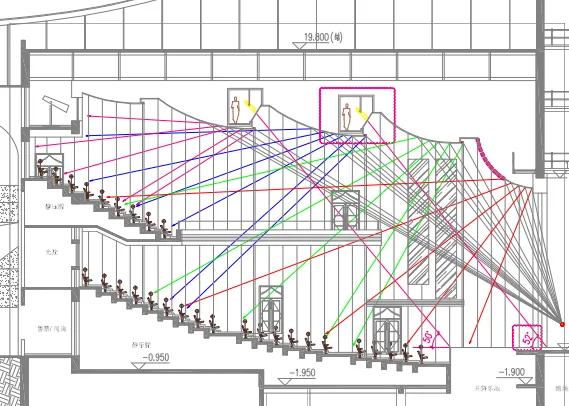
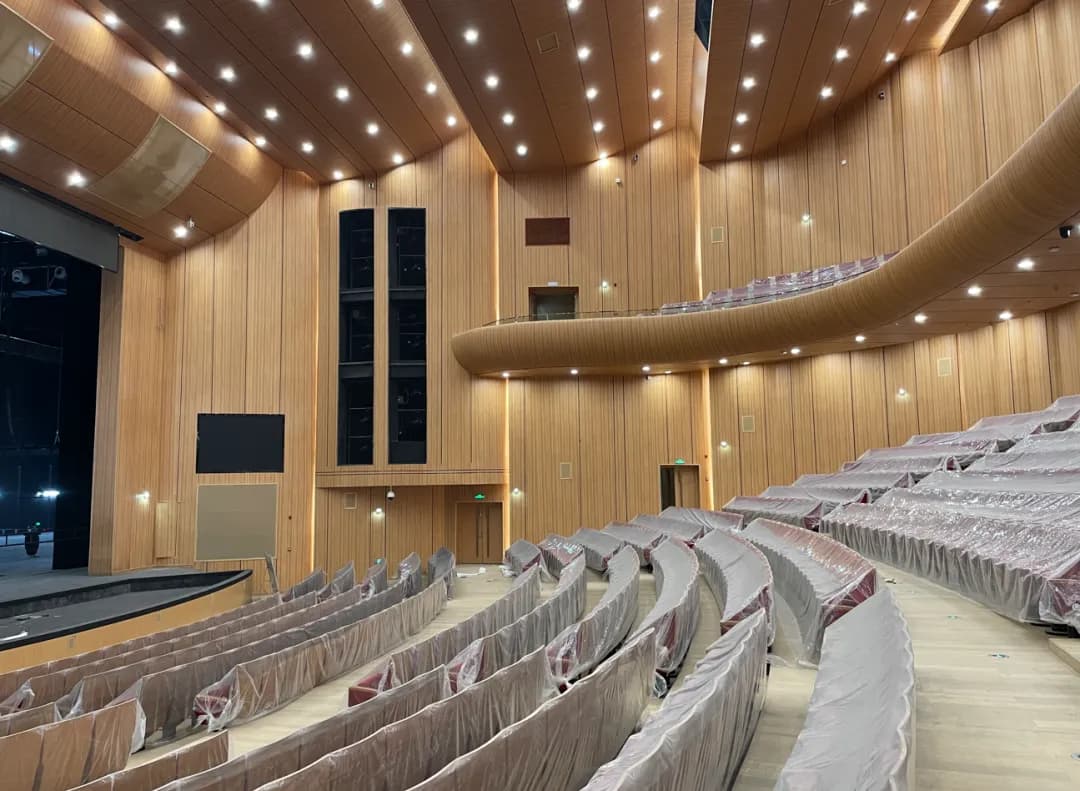
We systematically analyzed and optimized the proscenium splayed walls, side walls, rear walls, main ceiling, under-balcony ceiling, and balcony fascias. The concave rear side walls were refined to avoid sound focusing, while the rear wall and fascias were optimized to prevent echoes. Unfavorable acoustic openings were carefully controlled so the auditorium could achieve broad reflected sound coverage without interior acoustic defects.
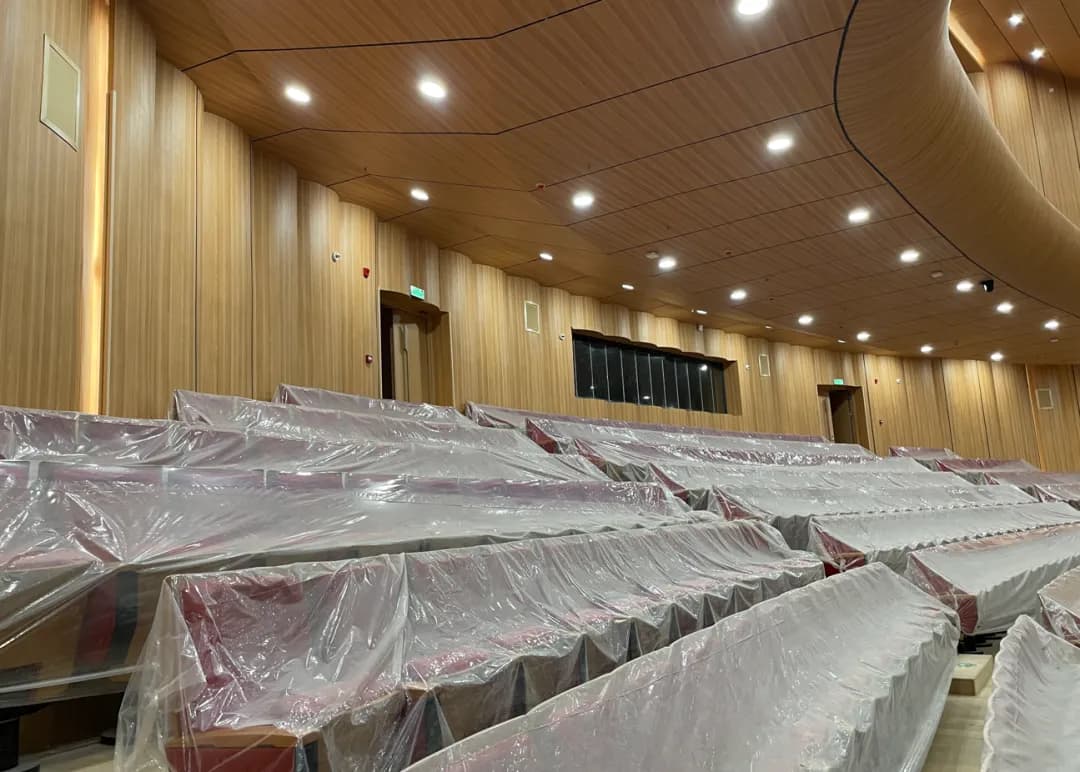
Acoustic Calculation, Material Recommendations, and Simulation
Following the geometric optimization of the Grand Theater, we performed acoustic calculations for the auditorium. Based on empirical material coefficients and material selection experience, acoustic performance requirements were established for every interior boundary.
For instance, the wooden GRG shaping on the side walls requires a material surface mass density of no less than 50kg/m², while the seating requires specific sound absorption coefficients across the frequency spectrum.
Acoustic material controls were also implemented for the orchestra pit, stage, sound bridges, front lighting bridges, follow-spot room, sound control room, orchestra shell, and lighting and audio control rooms. Building on this foundation, acoustic simulation verified reverberation time and reviewed distribution maps for C80, G, LF, and other parameters while checking for potential acoustic defects.
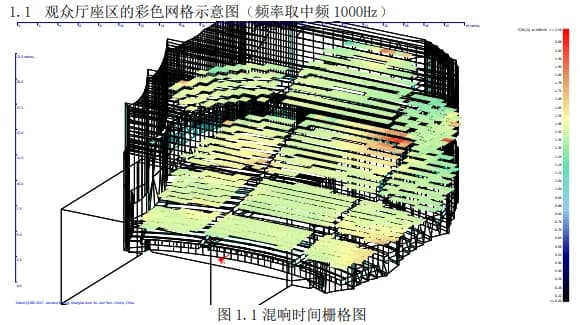
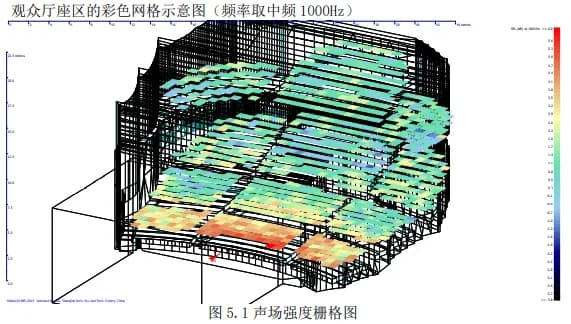
Measured Results and Acceptance
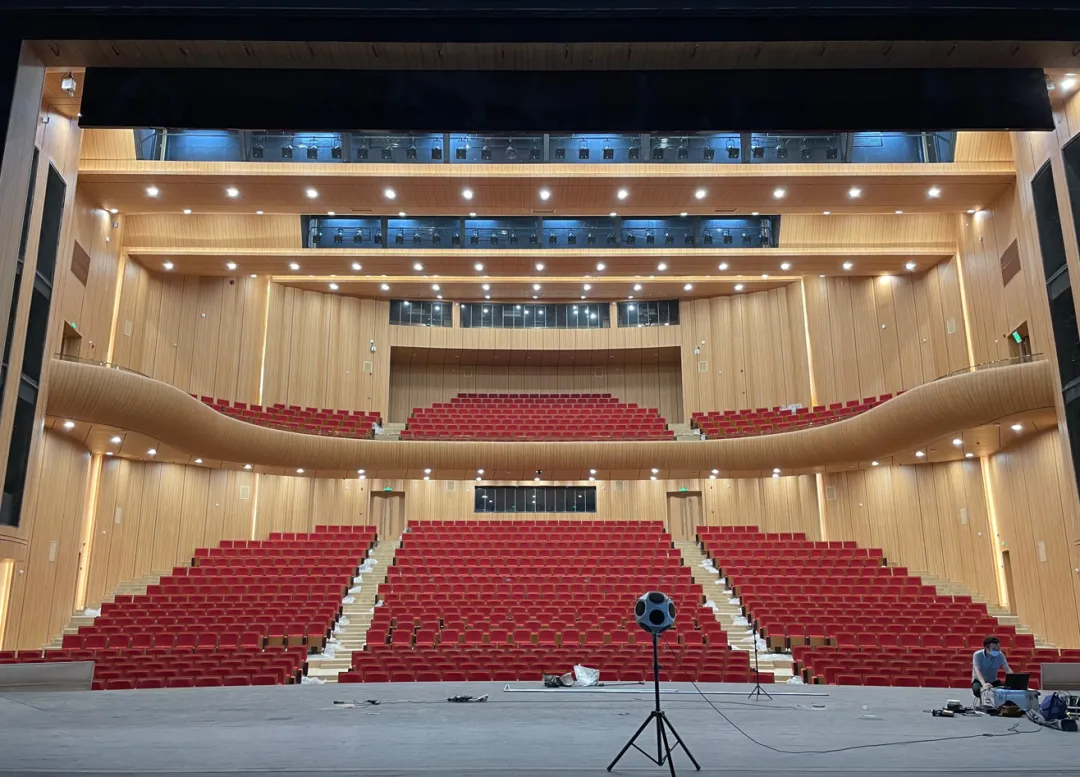
On July 25, 2022, during high temperatures of 40 degrees Celsius, acoustic testing and acceptance were conducted on site in Yuyao. At the time of arrival, the stage curtains had not yet been installed, and the reverberation of the stage was longer than anticipated.
The proscenium fire curtain was lowered for testing, and the primary acoustic parameters within the auditorium fell within the target range.
| Parameter | Value | Notes |
|---|---|---|
| RT (Mid-frequency) | 1.75 | Reverberance. Unoccupied, closed proscenium. Preferred occupied range: 1.3 to 1.5s. |
| EDT (Mid-frequency) | 1.74 | Reverberance. Preferred design value: 1.4 to 1.8. |
| G (Mid-frequency) | 3.1 | Strength of mid-frequency sound energy. Preferred design value: -1 to 2 dB. |
| ITDG | 27 | Intimacy. Preferred design value: ≤30. |
| C80,3 | 1.3 | Musical clarity. Preferred design value: 1 to 3 dB. |
| LFE4 | 0.24 | Spaciousness. Preferred design value: 0.15 to 0.35. |
| Background Noise | NR-25 | Quietness. Preferred design value: NR-30. |